🛂Should we Regulate Dystopian Fiction?Plus: What are the implications of corporate culture in AI firms on risk management and employee freedom of expression? And, what does the future hold for robotics?
Get in Front of 50k Tech Leaders: Grow With Us Brought to you by PestoAI: AI recruiter for remote tech talent!
Happy Wednesday everyone, Should dystopian fiction be regulated? Does it serve as a blueprint for reckless technological advancements, or merely as a cautionary tale? Additionally, what are the implications of corporate culture in AI firms on risk management and employee freedom of expression? And, what does the future hold for robotics? To unsubscribe, please find the link at the bottom of this newsletter or reply with telling me to go to hell and Ill delete you. Thanks.. Lets dive in…
📰 AI News and Trends
🌐 Other Tech news
What Is The Future Of Robotics?
A hot debate in AI is whether scaling up models and data, like with ChatGPT, could revolutionize robotics. Some researchers are excited by early successes, believing scaling could unlock powerful generalization in robots. Others are skeptical, citing challenges in data collection and the high cost of training large models. Even if scaling is feasible, it may not fully solve robotics, as achieving the needed accuracy and reliability for real-world tasks remains a challenge, which means we may not have our robobutler this year and plumbers will continue to get dirty, and yes self-driving car companies will continue to struggle to achieve full autonomy despite using large-scale models. The future of robotics is likely to be a mix of approaches, with scaling playing a significant role. Exploring hybrid systems, focusing on real-world tasks, and making robot learning systems more user-friendly are also key areas for development. By embracing diverse perspectives and thinking outside the box, researchers can unlock the full potential of robotics and shape its future. The world's first AI recruiter for remote tech talent!
PestoAI helps companies hire remote developers using the world's first AI recruiter. No job posting, no screening, no headaches! - Sign up for free Should We Regulate Dystopian Fiction?
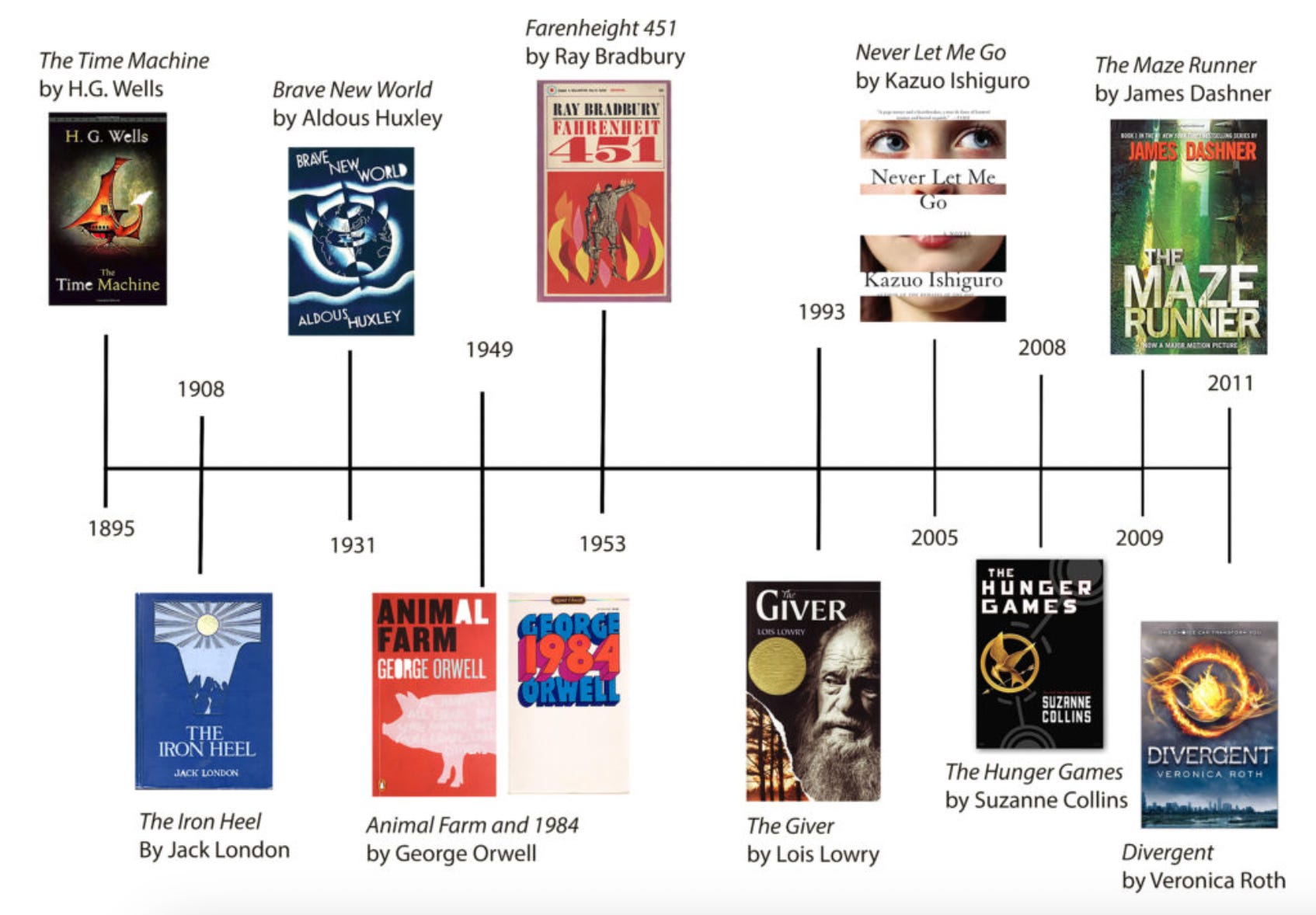
Recently, a "New Yorker" article titled "Are We Doomed?" discussed how dystopian books might be shaping our fears about AI, weapons of mass destruction, and other world-ending tech. It made me wonder if stories about dark futures are influencing our reality. A while back, I talked about needing a modern version of George Orwell's "1984"—a book about a government that twists the truth and crushes any opposition. Now, I'm diving into Aldous Huxley's "Brave New World Revisited." It looks at how propaganda and tech can tighten control over people—something we see more of in today's tech-heavy society. Think about how big Tech companies are buying up media and shaping what we think on platforms like Instagram and TikTok. They're not just influencing our opinions; they're steering what we buy and how we use money, especially as their digital currencies become more common (unfortunately not the decentralized kind we like) These companies also affect our emotional well-being. They're using AI to develop drugs that can change how we feel, look, and act. And with their massive budgets, they have a large influence in politics, making politicians their puppets—until we get to the point of having AI candidates. So, are we doomed? Did dystopian books predict this, or are they just cautionary tales? As troubling as these tech developments are, it's too simple to blame these stories for our tech problems. These books aren't guides; they're meant to warn us. But who is reading them and what are they getting out of them? To fight back against the sameness pushed by algorithms and preserve our unique identities, it's essential to promote critical thinking and media smarts—turn off Instagram for a bit! Encouraging a variety of viewpoints and valuing deep thought and thorough analysis over just passively taking in content can protect our independence. It's crucial to stay informed, critically assess all sides, and make choices on our own. What do you think? What else should we read to better understand these issues? I’d love to hear your thoughts. AI Firms Culture or Risk and Silencing Workers.
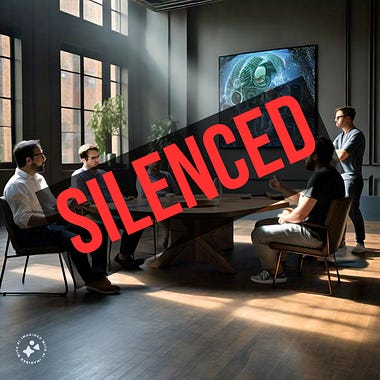
Current and former OpenAI employees have issued a public warning about the risks of rapidly advancing artificial intelligence, asserting that development is occurring with inadequate oversight and could lead to severe consequences like misinformation and inequality. Through an open letter, they call for stronger whistleblower protections and mechanisms for anonymous feedback within AI companies. The group criticizes OpenAI for previously imposing non-disparagement clauses on employees, a practice CEO Sam Altman has pledged but failed to fully end. The letter has support from leading AI researchers, including “The Godfather of AI” Geoffrey Hinton and it underscoring the urgency for greater transparency and responsibility in AI development. 🧰 AI ToolsCode and Programming
📰 Publications I am currently reading and recommending:
🚀 Showcase Your Innovation in the Premier Tech and AI Newsletter (link) As a vanguard in the realm of technology and artificial intelligence, we pride ourselves in delivering cutting-edge insights, AI tools, and in-depth coverage of emerging technologies to over 55,000+ tech CEOs, managers, programmers, entrepreneurs, and enthusiasts. Our readers represent the brightest minds from industry giants such as Tesla, OpenAI, Samsung, IBM, NVIDIA, and countless others. Explore sponsorship possibilities and elevate your brand's presence in the world of tech and AI. Learn more about partnering with us. You’re a free subscriber to Yaro’s Newsletter. For the full experience, become a paying subscriber. Disclaimer: We do not give financial advice. Everything we share is the result of our research and our opinions. Please do your own research and make conscious decisions.
|
Wednesday, June 5, 2024
🛂Should we Regulate Dystopian Fiction?









Monday, June 3, 2024
🔍Top AI Tools Identified Through Social Media Analysis.
🔍Top AI Tools Identified Through Social Media Analysis.Plus: Assessing the Impact of the Chips Act and The Spectrum of AI Concerns Highlighted in Community Discussions.
Get in Front of 50k Tech Leaders: Grow With Us Brought to you by GrowthSchool:
Happy Monday, everyone! For many teachers and students, today marks the first day of vacation. While some of you relax, our team is here to keep you updated on the continuous world-changing developments. Today, we're diving into an internet sentiment analysis about the best AI tools for productivity, along with AI risks. We'll also explore where the billions from the Chips Act are being invested. As always, stay tuned for our tool of the day and the latest news and trends. Let’s get started…
📰 AI News and Trends
🌐 Other Tech news
Top AI Tools Identified Through Social Media Analysis.
Recently, we published a Sentiment Analysis Tutorial to help you assess comments and engagement on social media and your website. This tool gauges the perceptions of your customers and followers regarding your products and services. We've applied these strategies broadly, most recently to identify which AI tools entrepreneurs and professionals are using to enhance their workflows and boost productivity. After analyzing thousands of comments across social media, Reddit, Medium, and other platforms, we've discovered a generally positive sentiment toward AI tools in startups. Users have shared a variety of tools that have significantly improved their productivity and efficiency. Below is a summary of the popular AI tools and their applications, as gathered from user feedback: 1. ChatGPT: No surprise here as this is the most talked about tool. Used extensively for generating content, automating customer responses, coding assistance, and more. 2. AI extensions like AiChatPilot: Enable using ChatGPT directly in web browsers for quick customer interactions. 3. Taskade AI & Clearscope: These tools are mentioned for SEO content analysis. 4. GitHub Co-Pilot: Assists in coding by suggesting code snippets and entire blocks. 5. Loom, Hunter.io, Google Workspace: Various uses from video messaging to email outreach and collaborative tools. 6. Midjourney: Although noted for being expensive, it's used for image generation. 7. Scenario.gg: For generating gaming assets. 8. Concise AI: Helps with summarizing news efficiently. 9. Whisper: For transcribing audio with high accuracy. 10. Echo.win: An AI tool for managing customer calls and providing automated responses. These tools reflect a trend towards using AI to enhance productivity across different aspects of business operations, from customer interaction to content creation and administrative tasks. The overall positive reception indicates that these tools are seen as beneficial in optimizing workflow and improving efficiency. 200+ hours of research on AI tools & hacks packed in 3 hoursThe only AI Crash Course you need to master 20+ AI tools, multiple hacks & prompting techniques in just 3 hours. Trust us, you will never waste time on boring & repetitive tasks, ever again! Get the crash course here for free (valid FOR next 24 hours only!)
This AI course has been taken by 1 Million people globally, helping them:
Register & save your seat now (100 free seats only) The Spectrum of AI Concerns Highlighted in Community Discussions.
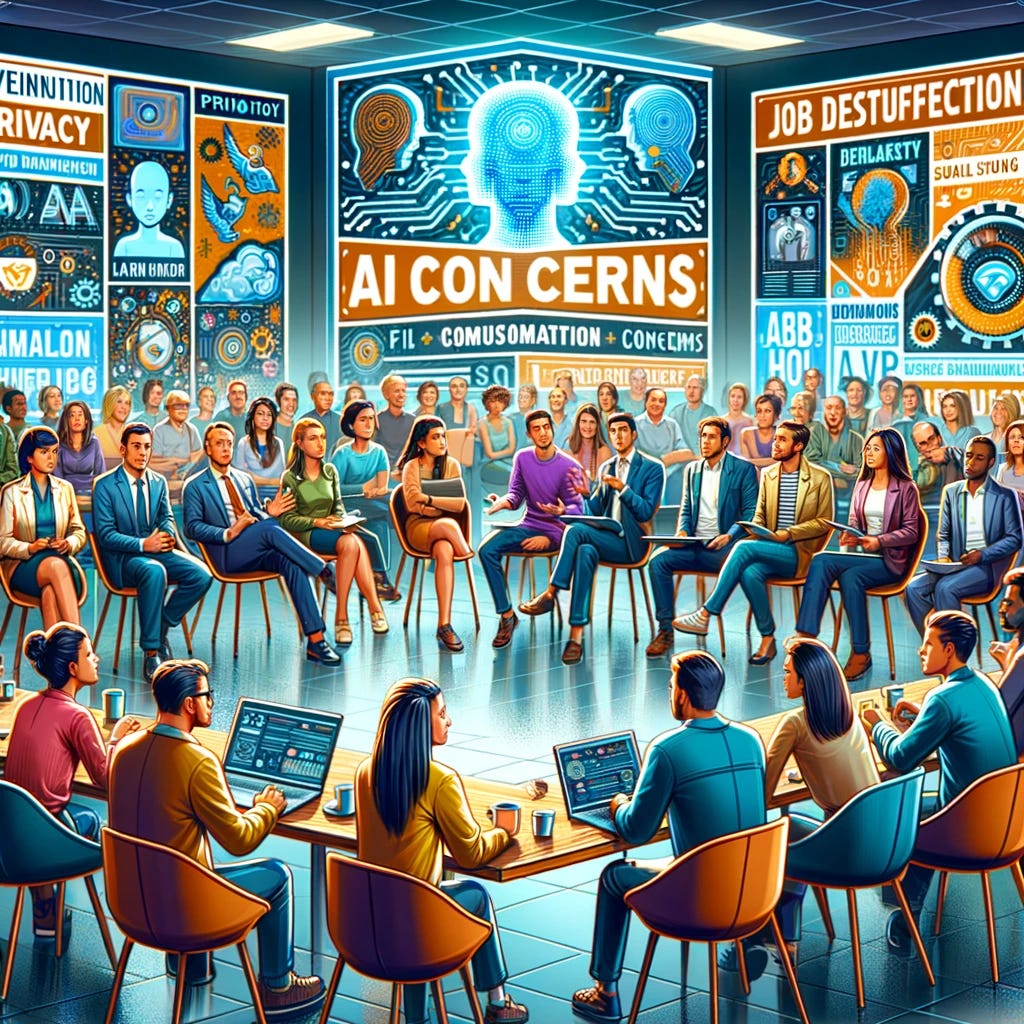
We did the same sentiment analysis for the dangers of AI. Contributors express a variety of fears regarding the implications of advanced AI technologies on society, employment, and ethical boundaries. Here’s a summary of the primary concerns:
This illustrates a broad awareness of both the transformative potential and the profound challenges that come with integrating AI into various aspects of human life. I have to add that losing creativity and mental abilities is another huge risk. If the brain is a muscle and we do not need to work it out anymore thanks to relying on this technology it will certainly lose its strength. Contributors are particularly worried about the pace of development outstripping the establishment of necessary ethical and regulatory frameworks to ensure safe and beneficial outcomes. 🧰 AI ToolsAnimation and Video
📰 Publications I am currently reading and recommending:
Assessing the Impact of the Chips Act.
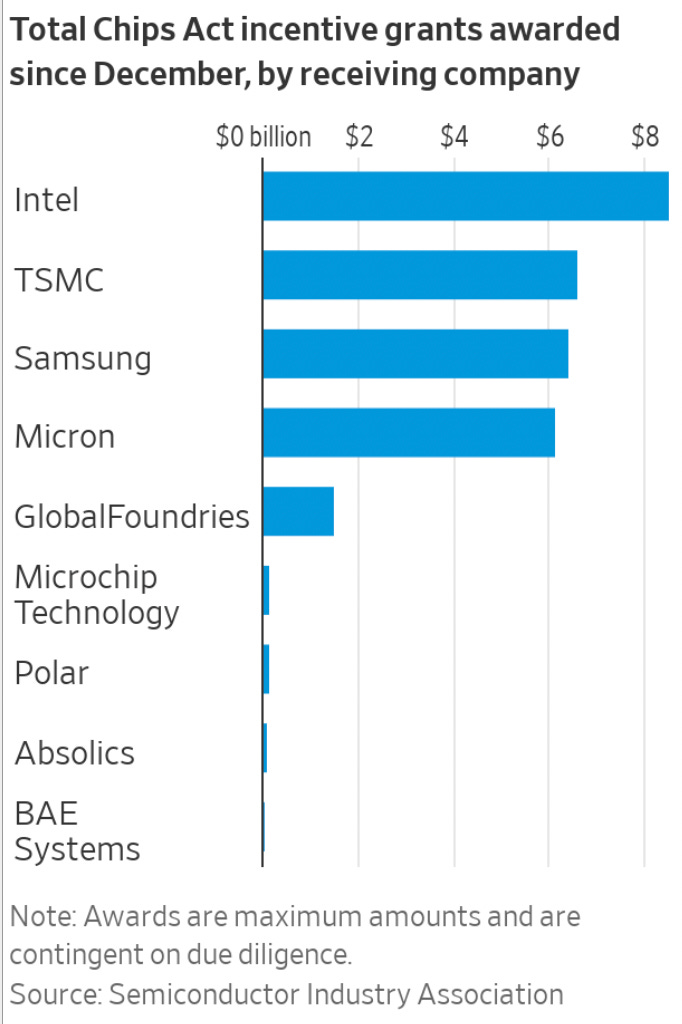
This week, the Wall Street Journal explores the global competition in semiconductor manufacturing, as the industry is projected to grow to $1 trillion by 2030. The U.S. Chips Act of 2022, with a $53 billion investment, aims to boost domestic production but faces challenges from international competition and high production costs. Despite these hurdles, the initiative is expected to triple U.S. chip production by 2032, increasing the national share of global chip output slightly from 12% to 14%. Major investments are directed towards new manufacturing facilities, with significant grants to industry giants like Intel and TSMC. However, obstacles such as labor disputes and environmental concerns may impede progress, and the overall success of the Act in enhancing U.S. semiconductor capabilities remains uncertain. 🚀 Showcase Your Innovation in the Premier Tech and AI Newsletter (link) As a vanguard in the realm of technology and artificial intelligence, we pride ourselves in delivering cutting-edge insights, AI tools, and in-depth coverage of emerging technologies to over 55,000+ tech CEOs, managers, programmers, entrepreneurs, and enthusiasts. Our readers represent the brightest minds from industry giants such as Tesla, OpenAI, Samsung, IBM, NVIDIA, and countless others. Explore sponsorship possibilities and elevate your brand's presence in the world of tech and AI. Learn more about partnering with us. You’re a free subscriber to Yaro’s Newsletter. For the full experience, become a paying subscriber. Disclaimer: We do not give financial advice. Everything we share is the result of our research and our opinions. Please do your own research and make conscious decisions.
|