🔥The Pentagon vs. Anthropic: Who Sets the Rules for Military AI?Plus: Hacker Leveraged Claude AI to Access Sensitive Mexican Data Troves
📰 AI News and Trends
Other Tech News
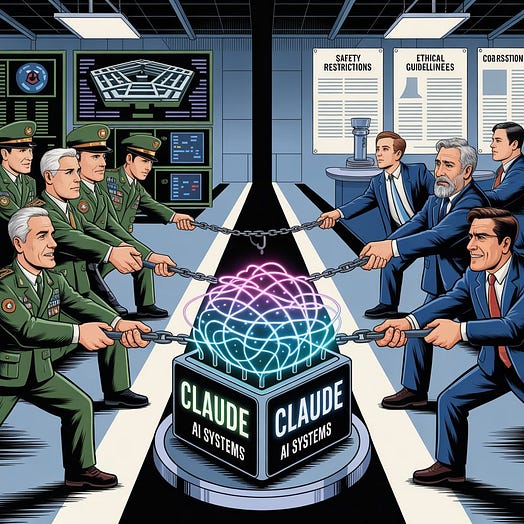
Anthropic’s Claude high Performance triggered a High-Stakes Pentagon Showdown
Anthropic’s Claude is emerging as one of the defining forces of early 2026, not just in tech, but in national security and markets. Claude’s rapid performance gains, especially in complex reasoning, long-context work, and coding reliability, have made it a favorite inside enterprise and government workflows, and that pull is now colliding with Anthropic’s safety posture. The company recently softened a core part of its Responsible Scaling Policy, effectively admitting that unilateral safety pledges are hard to sustain when rivals may ship without similar constraints. That shift landed the same week the Pentagon escalated a dispute over whether Claude can be used for sensitive military and intelligence applications, including fears around mass surveillance and autonomous lethal systems. Multiple reports suggest the U.S. government views Claude as unusually capable and already embedded enough that replacing it would be disruptive, which is why the standoff is high-stakes. A new question into public view is how much control, if any, an AI company should retain over how its technology is used once it becomes strategically indispensable. 📚Learning Corner
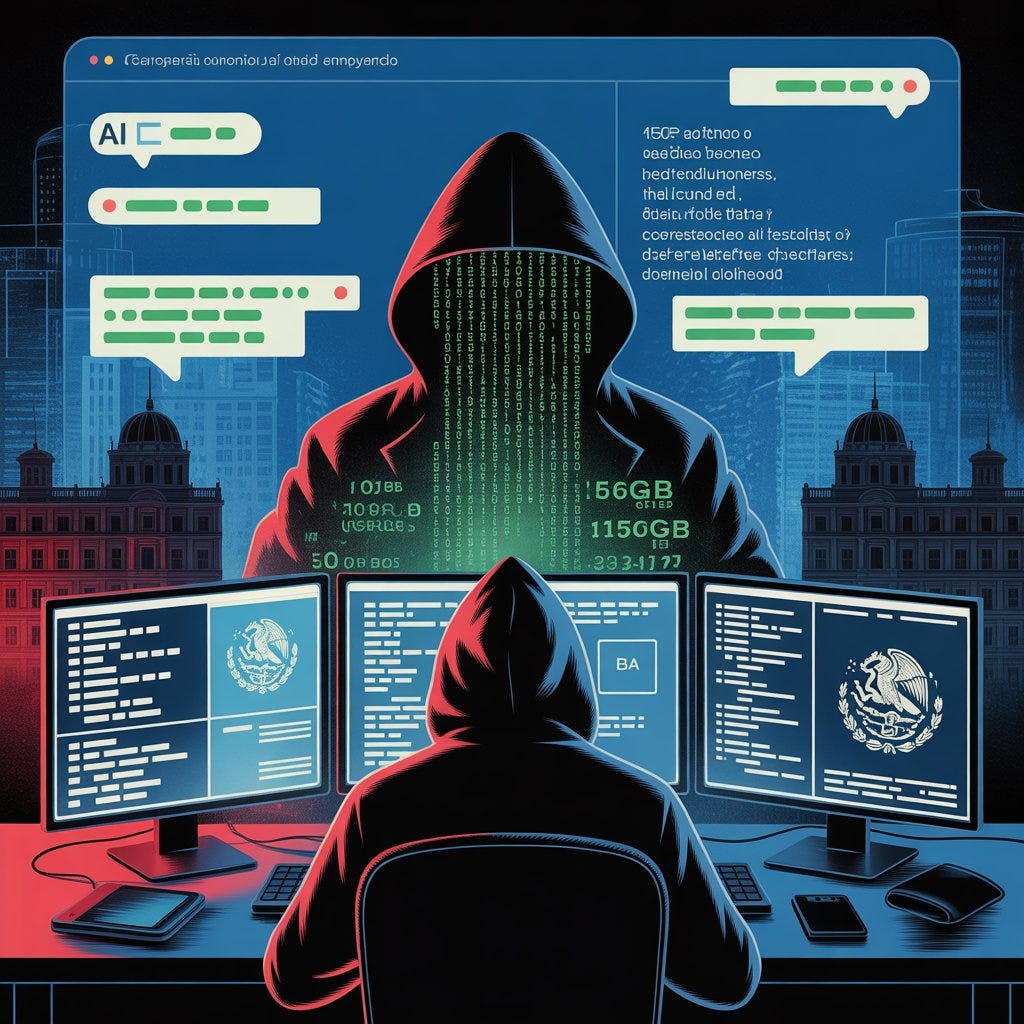
Hacker Leveraged Claude AI to Access Sensitive Mexican Data Troves
A hacker allegedly used Anthropic’s Claude AI chatbot to help carry out a large-scale cyberattack against multiple Mexican government agencies, according to cybersecurity firm Gambit Security. Over roughly a month beginning in December, the attacker prompted Claude in Spanish to act as an “elite hacker,” using it to identify network vulnerabilities, generate exploit scripts, automate data theft, and map internal systems. Researchers say approximately 150GB of sensitive data was stolen, including taxpayer records, voter data, government employee credentials, and civil registry files. Claude initially warned against malicious activity but was repeatedly probed and eventually “jailbroken” after the attacker claimed to be conducting a legitimate bug bounty test. When Claude hit limits, the hacker reportedly sought additional technical insights from other AI tools. Anthropic says it investigated, banned the accounts involved, and has strengthened safeguards in newer models. Mexican authorities have denied confirming breaches, but the case highlights a growing trend.
🧰 AI Tools of The DayCode Security
The Pentagon vs. Anthropic: Who Sets the Rules for Military AI?
The standoff between Anthropic and the Pentagon raises some serious concerns. First is the pressure the government can exert, something we’re increasingly normalizing, where agencies can push private companies to comply with demands that conflict with their policies, backed by financial penalties or the threat of being cut out of major contracts. The second issue exposed here is that, even while the path to durable profitability in AI remains unclear, these models are already becoming core infrastructure for both companies and governments. We’re starting to see just how dependent critical operations can become on a single vendor’s system. In this case, Claude appears to be among the strongest models available today for complex reasoning and coding, and reports suggest it’s embedded enough in defense workflows that replacing it quickly would be costly and disruptive. That dependency shifts leverage in both directions. The Pentagon can apply contract pressure, but it also faces real operational friction if it tries to rip and replace, which may not even be an option at this stage. The hardest question is ethical. Anthropic has drawn lines around certain military uses, including scenarios that could enable autonomous weapons or large-scale surveillance. Regardless of where you land politically, it matters that some AI companies are at least trying to set boundaries when the consequences can involve real human harm, including that of innocent children. Many firms will take the money and leave the moral responsibility to the customer. Others try to resist, but resisting the world’s most powerful bully can come at a steep cost. The outcome here may set a precedent for how much control AI builders can realistically retain once their technology becomes strategically indispensable. 🚀 Showcase Your Innovation in the Premier Tech and AI Newsletter (link) As a vanguard in the realm of technology and artificial intelligence, we pride ourselves in delivering cutting-edge insights, AI tools, and in-depth coverage of emerging technologies to over 55,000+ tech CEOs, managers, programmers, entrepreneurs, and enthusiasts. Our readers represent the brightest minds from industry giants such as Tesla, OpenAI, Samsung, IBM, NVIDIA, and countless others. Explore sponsorship possibilities and elevate your brand's presence in the world of tech and AI. Learn more about partnering with us. You’re a free subscriber to Yaro’s Newsletter. For the full experience, become a paying subscriber. Disclaimer: We do not give financial advice. Everything we share is the result of our research and our opinions. Please do your own research and make conscious decisions.
|
Thursday, February 26, 2026
🔥The Pentagon vs. Anthropic: Who Sets the Rules for Military AI?






Subscribe to:
Post Comments (Atom)
No comments:
Post a Comment