
Don’t want to sound repetitive, but the last time we shared our newsletter, we wrote about the heartbreaking earthquake in Colombia, the casualties, and the ways technology was helping responders and locals find missing relatives. Now, we’re writing less than 24 hours after a magnitude 6.7 earthquake struck the Ayacucho region of southern Peru on Thursday, August 20, 2026, at approximately 1:00 PM local time. There seems to be a trend with these faults moving so much lately in nearby areas along the Pacific coast of Latin America, and I keep wondering: is there more we could do to alert nearby citizens of these tectonic movements so they have time to prepare? Earthquake early-warning systems detect an earthquake after it begins and send alerts to locations that have not yet experienced the strongest shaking. Depending on the distance from the epicenter, this can provide anywhere from a few seconds to tens of seconds to take protective action, such as Drop, Cover, and Hold On, moving away from hazards, or automatically slowing trains and stopping equipment. Alerts can be delivered through emergency notifications, mobile apps, sirens, public-address systems, and automated building systems. I lived in Mexico City for a few years, where, when significant seismic activity is detected within the country’s geographic region, including surrounding waters, an alarm can be activated, notifying mobile devices while sirens mounted on light posts and other infrastructure sound throughout the city. Everyone knows that when those alarms go off, it is time to move quickly, leave dangerous areas, or take cover. But what else could we do to reduce casualties? Can we implement stronger and more consistent building codes globally so structures are designed to withstand major earthquakes? Can we train everyone to know exactly what to do when an earthquake strikes? Can AI, satellite technology, distributed sensors, smartphones and other connected devices help us detect seismic activity faster and reach people more effectively? There are so many questions here. It is difficult to imagine installing sensors 100 kilometers underground to continuously monitor fault movement and notify the population above ground. But as we experience significant tectonic activity across different regions, we should be investing more time, technology and resources into improving early-warning systems and building infrastructure that is more resilient to earthquakes. We may never be able to predict exactly when an earthquake will happen, but perhaps technology can help us get better at detecting it faster, warning people sooner and making our buildings and communities more resilient. I would love to hear your comments, suggestions and ideas. What technologies or approaches do you think we should be investing in now to reduce casualties from future earthquakes? In today’s issue:
📰 AI News and Trends
Politicians Now Opposed Data Centers.The AI data-center boom is hitting a political wall. Politicians who once competed to attract AI infrastructure are increasingly slowing or restricting projects as voters push back over rising electricity demand, water consumption, infrastructure strain and fears that AI will eliminate jobs. Texas Gov. Greg Abbott is the clearest example: after promoting Texas as the “epicenter of AI development” and celebrating Google’s planned $40 billion investment, his administration has now paused approvals affecting roughly 1,800 proposed data centers. In Pennsylvania, Gov. Josh Shapiro, once an AI supporter, has given the state greater power to block projects, while candidates in Ohio, Nevada and Wisconsin are also embracing restrictions. Public opinion is moving quickly, more than 60% of Americans now oppose new data centers in their communities, up from 49% in March. The backlash could become a serious constraint on AI expansion. Investor Chamath Palihapitiya estimates widespread opposition could eventually shave 2–3% from annual economic growth. The bigger story for investors is that AI’s next bottleneck has added political permission alongside electricity, water, and land. 📚 Learning CornerCalifornia Is Capturing the AI Investment Boom
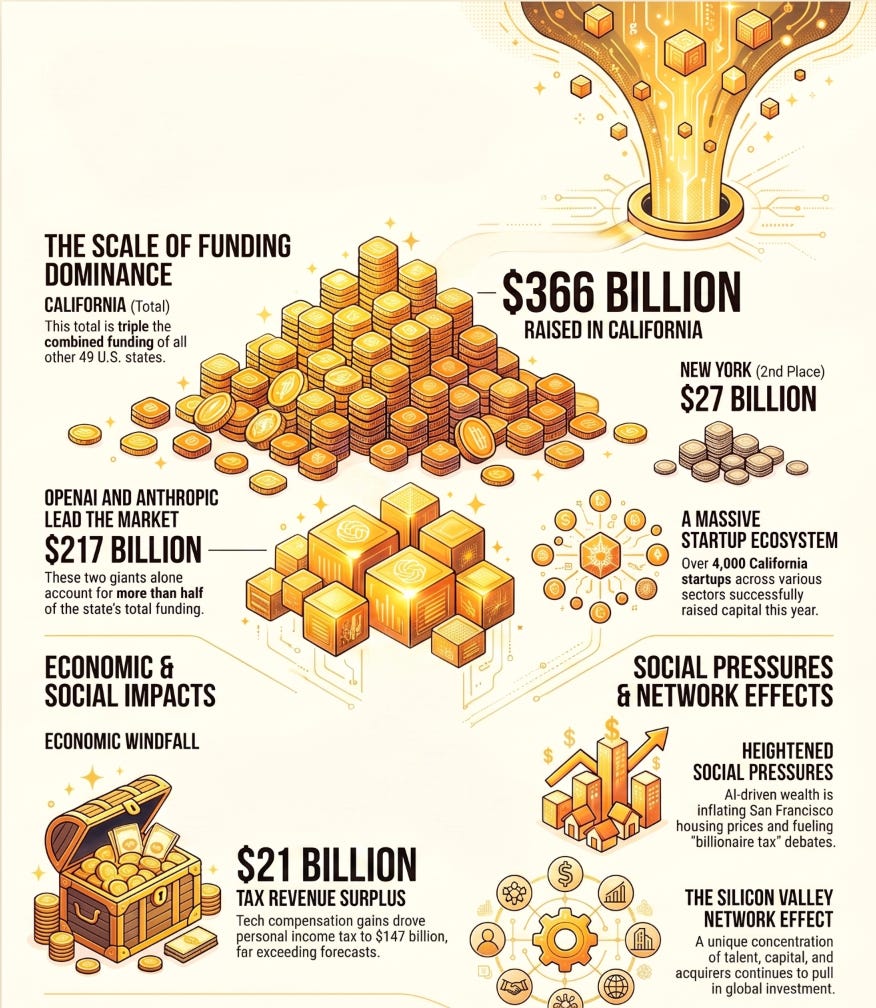
California is experiencing an unprecedented venture-capital boom driven primarily by AI. Startups in the state have attracted approximately $366 billion in VC funding in 2026, more than 3× the combined total of the other 49 states and nearly 2× California’s previous record set in 2025. New York is a distant second with just $27 billion. Two companies, OpenAI ($122B) and Anthropic ($95B), account for more than half of California’s funding, but the boom extends across the ecosystem, with 4,000+ California startups raising capital this year, including defense startup Hadrian Automation ($1.37B) and Whatnot ($545M). The AI investment surge is also benefiting California’s government: personal-income tax revenue reached roughly $147 billion, versus a forecast of $126 billion, a $21 billion upside, largely driven by rising tech compensation and stock-market gains. The concentration reflects Silicon Valley’s unique combination of AI talent, venture capital, startups, customers and potential acquirers, creating a powerful network effect that is attracting even more capital. The downside, well, AI wealth is pushing San Francisco housing prices higher and creating political tension around a proposed billionaire tax. Despite California’s high costs and regulatory challenges, if you want to build, fund or acquire an AI company, Silicon Valley remains the place where the money and talent are concentrated. 🧰 AI Tools of The DayBest AI Coding Tools
Slack Turns AI Coding Into a Team Sport
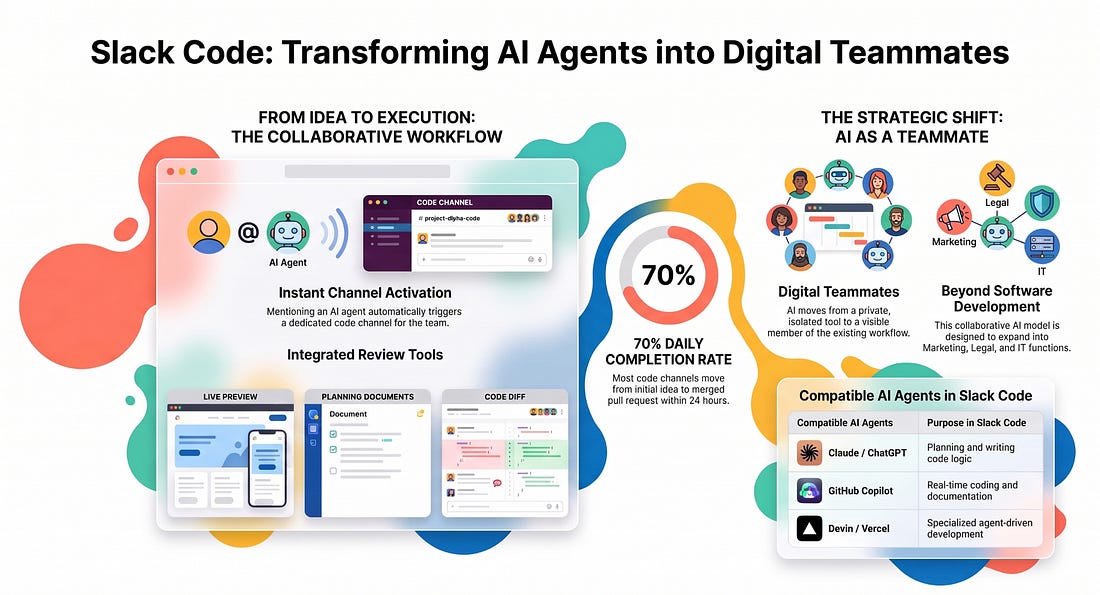
Slack is introducing Slack Code, a new way for teams to work with AI coding agents directly inside Slack instead of sending developers into private AI coding tools. When someone mentions an agent such as Claude, Devin, GitHub Copilot, ChatGPT or Vercel, Slack can automatically create a dedicated code channel where the agent, engineers and other teammates can plan, write, review and test code together. The channel can display code diffs, planning documents and live previews, allowing humans to catch mistakes, provide context or redirect the agent while work is happening. Slack says more than 70% of code channels are created and completed within a single day, often taking work from idea to merged pull request. The bigger strategic shift is that Slack is positioning AI agents not as private tools, but as digital teammates embedded in the company’s existing workflow. The model could extend well beyond software development into marketing, legal, IT and other business functions. In other words, Slack is betting that the future of AI at work isn’t one employee + one agent working in isolation, but humans and multiple agents collaborating in the same shared workspace. 🚀 Showcase Your Innovation in the Premier Tech and AI Newsletter (link) As a vanguard in the realm of technology and artificial intelligence, we pride ourselves in delivering cutting-edge insights, AI tools, and in-depth coverage of emerging technologies to over 55,000+ tech CEOs, managers, programmers, entrepreneurs, and enthusiasts. Our readers represent the brightest minds from industry giants such as Tesla, OpenAI, Samsung, IBM, NVIDIA, and countless others. Explore sponsorship possibilities and elevate your brand's presence in the world of tech and AI. Learn more about partnering with us. You’re a free subscriber to Yaro’s Newsletter. For the full experience, become a paying subscriber. Disclaimer: We do not give financial advice. Everything we share is the result of our research and our opinions. Please do your own research and make conscious decisions.
|






No comments:
Post a Comment