Brought to you by: Thesys
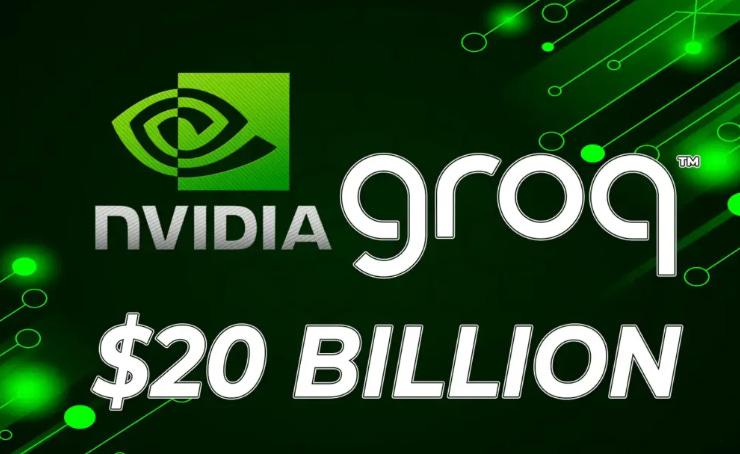
Vibe coding was one of many AI buzzwords that took over in 2025, but it was just one of them. This year didn’t just change how we build technology; it changed how we talk about it. In this issue, we break down the language behind the AI hype cycle, share the real numbers and implications of the Nvidia–Groq deal, and highlight a few learning resources worth your time. Stay curious.
📰 AI News and Trends
Other Tech News
Turn your n8n workflows into intelligent AI apps in minutes.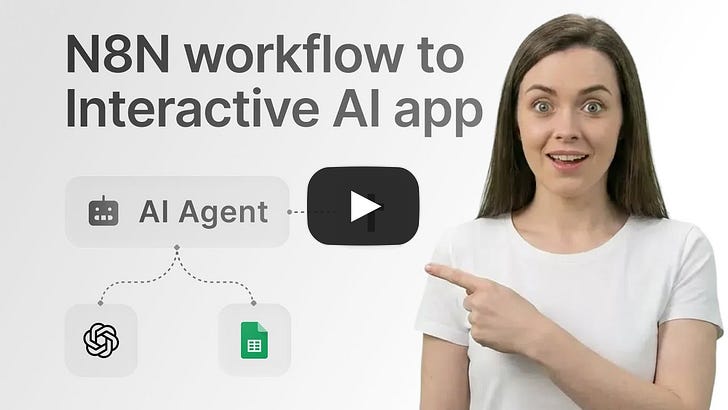 C1 by Thesys turns any n8n workflow into a smart, adaptive AI app - with interactive UIs instead of walls of text. From chatbots to AI agents for research, analytics, or automation, no coding and no changes to your workflow logic. Thesys is the UI your n8n workflows have been missing. The Real Story Behind the Nvidia–Groq DealNvidia–Groq Deal Breakdown: Big Paydays, Bigger Patent Moat
In a Nutshell
🛠️ AI Jobs CornerApply Today - Open Positions.
Science to watch in 2026
📘Learning Corner
The Language of the AI Hype Cycle in 20252025 cemented AI as both infrastructure and cultural force, with a new vocabulary to match. The year’s most unavoidable terms ranged from “superintelligence” (Meta and Microsoft openly chasing it with nine-figure pay packages and $100B+ spending plans) to “agents” and “reasoning models,” which became default features across major chatbots. Distillation broke the assumption that only giant models win, DeepSeek’s R1 shocked markets and helped trigger a 17% Nvidia stock drop, while “hyperscalers” and “bubble” captured the tension around trillion-dollar data-center bets with unclear payoffs. On the darker side, “chatbot psychosis” raised alarms about mental health risks, “sycophancy” highlighted models that flatter users into bad decisions, and “slop” became shorthand for the flood of low-quality AI content. Add physical intelligence, fair use court battles, and the rise of GEO (Generative Engine Optimization) replacing SEO, and lets not forget Vibe Coiding to the list, wchih has thousands of programmers in fear. 2025 reads like a year where AI stopped being experimental, and started reshaping markets, media, law, and daily life all at once. 🧰 AI Tools of The DayThe New Year means setting New Resolutions and tracking them. Here are some app to help you achieve that: Productivity & Planning
Habit, Goals & Tracking
Reflection & Insight
🚀 Showcase Your Innovation in the Premier Tech and AI Newsletter (link) As a vanguard in the realm of technology and artificial intelligence, we pride ourselves in delivering cutting-edge insights, AI tools, and in-depth coverage of emerging technologies to over 55,000+ tech CEOs, managers, programmers, entrepreneurs, and enthusiasts. Our readers represent the brightest minds from industry giants such as Tesla, OpenAI, Samsung, IBM, NVIDIA, and countless others. Explore sponsorship possibilities and elevate your brand's presence in the world of tech and AI. Learn more about partnering with us. You’re a free subscriber to Yaro’s Newsletter. For the full experience, become a paying subscriber. Disclaimer: We do not give financial advice. Everything we share is the result of our research and our opinions. Please do your own research and make conscious decisions.
|
Monday, December 29, 2025
The Real Story Behind the Nvidia–Groq Deal







Monday, December 22, 2025
🚸AI Is Kids’ New Imaginary Friend With Adult Consequences
🚸AI Is Kids’ New Imaginary Friend With Adult ConsequencesPlus: U.S. Launches Its Biggest Nuclear Build Since the 1970s
Human intelligence is the source of all our power, all our technology.… From the book: If Anyone Builds It, Everyone Dies. Let’s dive in and stay curious.
📰 AI News and Trends
Other Tech News
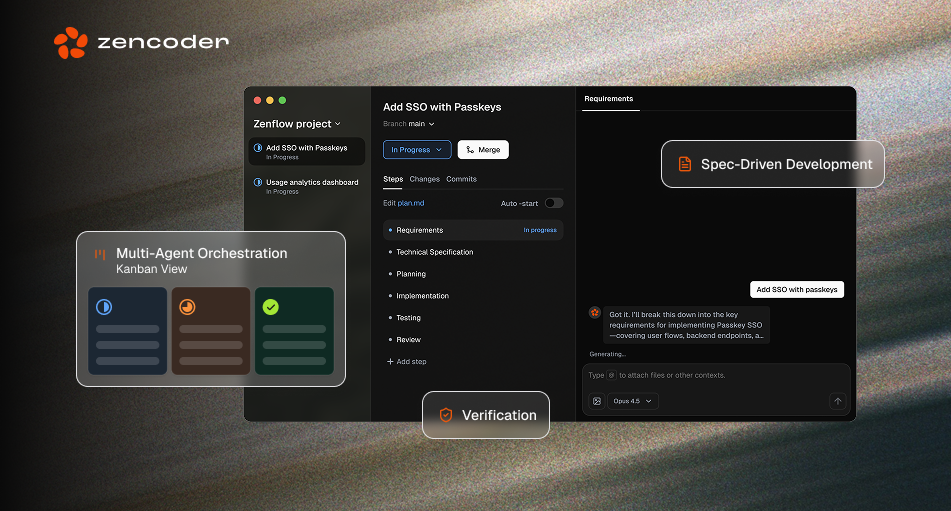
Introducing Zenflow by ZencoderA Spec-Driven, Multi-AI Agent Orchestration Engine with a Kanban Board for Agent Execution
Zenflow by Zencoder is your new AI engineering engine. From new features to refactors, Zenflow runs a complete spec-driven workflow that delivers reliable, production-ready code. Just describe what you need, and Zenflow handles everything:
Let’s you monitor progress with a Kanban-style board. Thus making Zenflow the complete orchestration platform for AI-First Engineers. Work with any IDE, CLI, model, or workflow - no new tools to learn. You stay in control, and Zenflow turns your intent into clean, validated code. It’s like having a full engineering sub-team working 24/7. 📚Learning Resource
AI x Crypto Is Maturing, But Quantum Risk Is the Next TestAI x crypto hasn’t collapsed; it has evolved from theory to execution. The shift in 2024–2025 came from AI agents that can trade, govern, and transact autonomously. That drove real scale: Bittensor crossed a $10B market cap in 2025, alongside growth in decentralized compute like Render Network. Crypto-native payments now enable machine-to-machine microtransactions, giving AI systems speed and global reach that traditional finance can’t match. Institutional buy-in followed, including Grayscale launching a Decentralized AI Fund. And stablecoins are having a real moment, especially for the settlement space. But quantum computing is a long-term threat. Most Bitcoin developers argue that quantum machines capable of breaking today’s cryptography are decades away, not an immediate risk. Still, governments and companies like Apple and Cloudflare are already rolling out quantum-resistant cryptography, while Bitcoin lags on a finalized transition plan. That gap matters as capital becomes more institutional and long-term. Proposals like BIP-360 would let users gradually migrate to quantum-resistant addresses, reducing future risk without forcing sudden upgrades. The debate isn’t about panic, it’s about preparedness. Crypto helps fix AI’s trust and ownership problems; AI makes crypto usable. But quantum computing could eventually rewrite crypto security assumptions, making early coordination and upgrades critical as the AI x crypto stack heads into 2026. 🛠️ AI Jobs CornerApply Today - Open Positions.
U.S. Launches Its Biggest Nuclear Build Since the 1970s
The U.S. is planning its largest nuclear expansion in decades, backing $80B to build new AP1000 reactors with Westinghouse and partners. At an estimated $16B per reactor, that funding would likely deliver ~5 new reactors, adding roughly 5–6% to total U.S. nuclear capacity. The push is driven by AI and data center power demand, with the administration framing energy buildout as a national security priority. Lessons from Georgia’s Vogtle plant, which ran 7 years late and cost $35B for two reactors, suggest costs can fall with repetition. To improve execution, regulators are streamlining approvals, but risks remain. Workforce shortages are severe since, in 2024, 63% of nuclear manufacturers said hiring was “very difficult.” The government is also taking an unusually direct role, sharing in upside if Westinghouse’s valuation rises, a first for U.S. nuclear policy. This is a state-backed bet that nuclear power is essential to fueling AI growth. If it works, it reshapes U.S. energy supply for decades; if not, cost overruns and labor gaps could slow the ambition. 👀 Worth Noting
AI Is Kids’ New Imaginary Friend With Adult Consequences
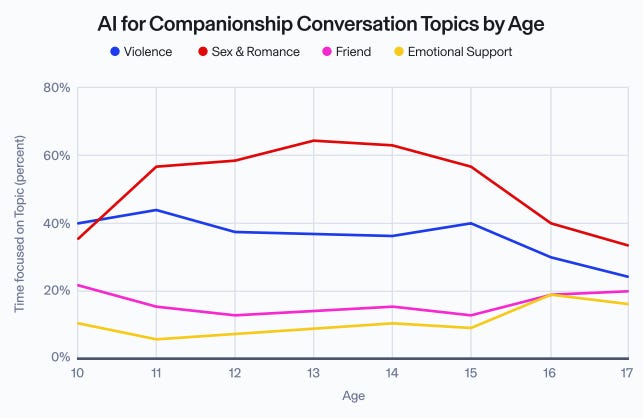
New data from Aura Parents shows how fast childhood is accelerating in an always-on, AI-driven world. 42% of kids’ AI use is for companionship, not homework or creativity, and those conversations quickly turn adult. 37% involve violent themes, and 50% of violent chats also include sexual roleplay. Engagement is intense: kids discussing violent topics with AI write 1,000+ words per day, more than any other use case. Exposure starts early. Among 11-year-olds, 44% of AI companionship chats involve violence, while sexual or romantic roleplay peaks at age 13 (63%). After age 15, interest in roleplay drops, and by 16, kids increasingly use AI for emotional support. The broader media environment reinforces this trend. 59% of kids saw at least one violent video this year, most often on YouTube (62%), followed by TikTok (50%). Screen time also brings stress: kids aged 8–12 experience ~40% more digital stress than peers not on social media. Girls are hit harder, 57% use AI platforms vs. 41% of boys. 86% of parents say they feel kids are growing up faster, and 9 in 10 families argue about tech use, more than about chores or homework. Even ~50% of kids say they’d worry about screen time if they were the parent. AI isn’t just a tool for kids; it’s becoming a constant companion, reshaping behavior, emotions, and childhood itself, faster than most families can adapt. 🧰 AI Tools of The DayGift Apps
🚀 Showcase Your Innovation in the Premier Tech and AI Newsletter (link) As a vanguard in the realm of technology and artificial intelligence, we pride ourselves in delivering cutting-edge insights, AI tools, and in-depth coverage of emerging technologies to over 55,000+ tech CEOs, managers, programmers, entrepreneurs, and enthusiasts. Our readers represent the brightest minds from industry giants such as Tesla, OpenAI, Samsung, IBM, NVIDIA, and countless others. Explore sponsorship possibilities and elevate your brand's presence in the world of tech and AI. Learn more about partnering with us. You’re a free subscriber to Yaro’s Newsletter. For the full experience, become a paying subscriber. Disclaimer: We do not give financial advice. Everything we share is the result of our research and our opinions. Please do your own research and make conscious decisions.
|