AI Image generators are getting better by getting worse.Plus: AI Image generators are getting better by getting worse.
Brought to you by: Thesys
Everyone seems to be using AI these days, but adoption is not even; we share why, and who is using it more. ChatGPT rolls out a Claude feature that creates agents in seconds, and AI image generators are adding imperfections to the outputs to make them look more real. Let’s dive in and stay curious.
📰 AI News and Trends
Other Tech News
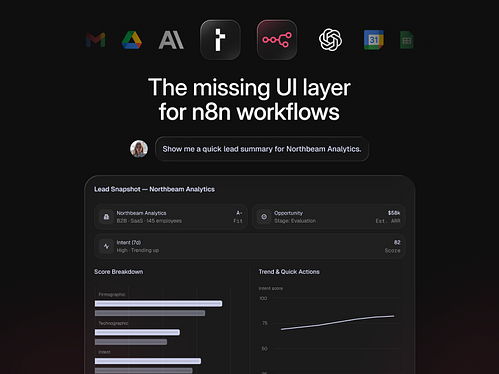
Turn your n8n workflows into intelligent AI apps in minutes.
C1 by Thesys turns any n8n workflow into a smart, adaptive AI app - with interactive UIs instead of walls of text. From chatbots to AI agents for research, analytics, or automation, no coding and no changes to your workflow logic. Thesys is the UI your n8n workflows have been missing. AI Use at Work Is Rising, but Adoption Is Uneven
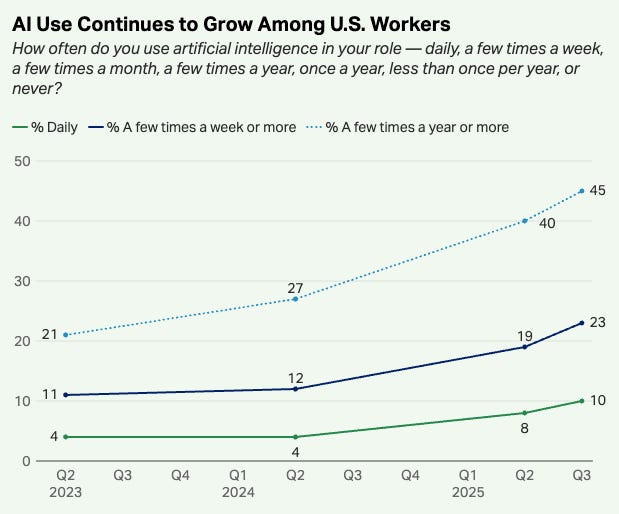
The use of AI in the U.S. workplace continues to rise. In Q3 2025, 45% of employees reported using AI at work at least a few times a year, up from 40% in Q2. Frequent use jumped faster, from 19% to 23%, while daily use remains limited at ~10% of the workforce. Who’s using AI the most
Organizations are split on AI adoption
What employees use AI for
Over two years, AI use at work has nearly doubled (from 21% in 2023 to 45% in 2025). But adoption is still concentrated in white-collar roles, and guidance lags execution. While 44% of organizations are integrating AI, only 22% have clearly communicated a plan. AI is spreading fast, but without a clear strategy and manager support, most employees are still experimenting on their own, and daily AI use remains far from mainstream. 🛠️ AI Jobs CornerApply Today - Open Positions.
OpenAI Rolled Out “Skills”
OpenAI introduced Skills, a lightweight way for AI to follow reusable, file-based instructions. Skills are live in ChatGPT (Code Interpreter) and the Codex CLI. BUT, What is a Skill? How does it work? Codex CLI = programmable agents AI Image generators are getting better by getting worse.
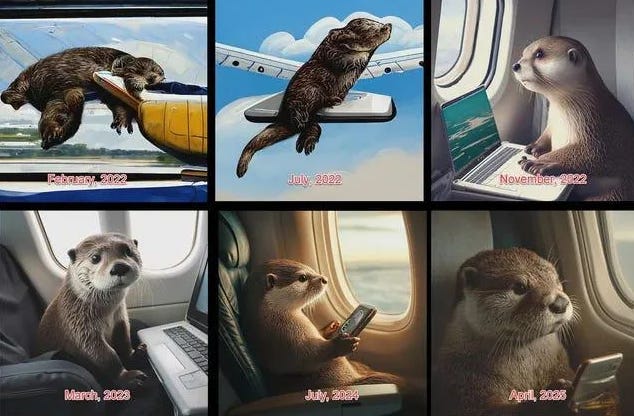
AI image generators are getting more realistic by adding imperfections, not removing them. They have gotten too good at creating perfect images which do not exist in our imperfect world. Instead of glossy, flawless images, new models mimic clutter, bad lighting, camera noise, and even the processing quirks of smartphone and security cameras. Tools from Google, Adobe, Meta, and OpenAI now copy how we record reality, which helps AI sidestep the uncanny valley and makes fakes harder to spot. The problem: verification is lagging. Standards like C2PA Content Credentials can label images as AI or real, but adoption is still limited. AI images look more believable by looking worse, and our ability to tell what’s real is falling behind. 🧰 AI Tools of The DaySearch our large AI tools Database of over 1000 tools for free. 🚀 Showcase Your Innovation in the Premier Tech and AI Newsletter (link) As a vanguard in the realm of technology and artificial intelligence, we pride ourselves in delivering cutting-edge insights, AI tools, and in-depth coverage of emerging technologies to over 55,000+ tech CEOs, managers, programmers, entrepreneurs, and enthusiasts. Our readers represent the brightest minds from industry giants such as Tesla, OpenAI, Samsung, IBM, NVIDIA, and countless others. Explore sponsorship possibilities and elevate your brand's presence in the world of tech and AI. Learn more about partnering with us. You’re a free subscriber to Yaro’s Newsletter. For the full experience, become a paying subscriber. Disclaimer: We do not give financial advice. Everything we share is the result of our research and our opinions. Please do your own research and make conscious decisions.
|
Monday, December 15, 2025
AI Image generators are getting better by getting worse.





Subscribe to:
Post Comments (Atom)
No comments:
Post a Comment