The holidays are almost here, and with that comes some drinking and fun conversations (well… most of the time). But what if you could get your AI drunk or high, too? How will that conversation be? Some people are now paying to put their chatbots on “digital drugs,” and we break down why they’re doing it and how it works. We also look at how developers are becoming 2×–3× more productive with AI, and whether Google is about to rethink the browser as we know it. Let’s dive in and stay curious.
📰 AI News and Trends
Other Tech News
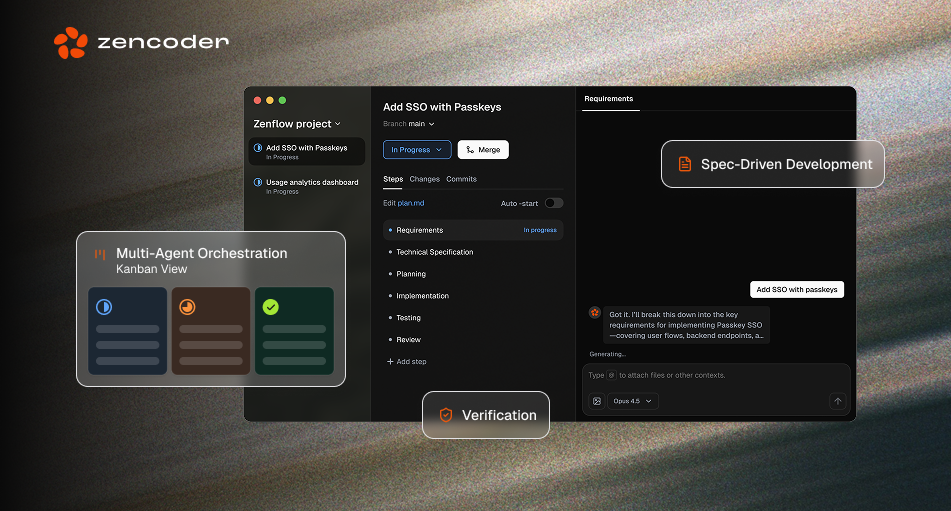
Introducing Zenflow by ZencoderA Spec-Driven, Multi-AI Agent Orchestration Engine with a Kanban Board for Agent Execution
Zenflow by Zencoder is your new AI engineering engine. From new features to refactors, Zenflow runs a complete spec-driven workflow that delivers reliable, production-ready code. Just describe what you need, and Zenflow handles everything:
Let’s you monitor progress with a Kanban-style board. Thus making Zenflow the complete orchestration platform for AI-First Engineers. Work with any IDE, CLI, model, or workflow - no new tools to learn. You stay in control, and Zenflow turns your intent into clean, validated code. It’s like having a full engineering sub-team working 24/7. The State of AI Coding 2025“We aren’t writing code anymore; we are managing the agents that do.”
Greptile’s latest report paints a picture of a software industry radically transformed by AI agents and advanced tooling. The headline metric is undeniable: Developer output has nearly doubled (+76%) in lines of code per developer, while the gap between major model providers (OpenAI vs. Anthropic) has effectively closed. The report highlights a shift from simple “copilots” to autonomous agents that manage larger, denser Pull Requests. 1. Engineering Velocity: The “Force Multiplier” EffectThe report analyzes internal data from March to November 2025, showing that AI tools are no longer just assisting developers, they are scaling them.
2. Tool Adoption: The New StackThe “AI Native” stack has solidified around a few key players.
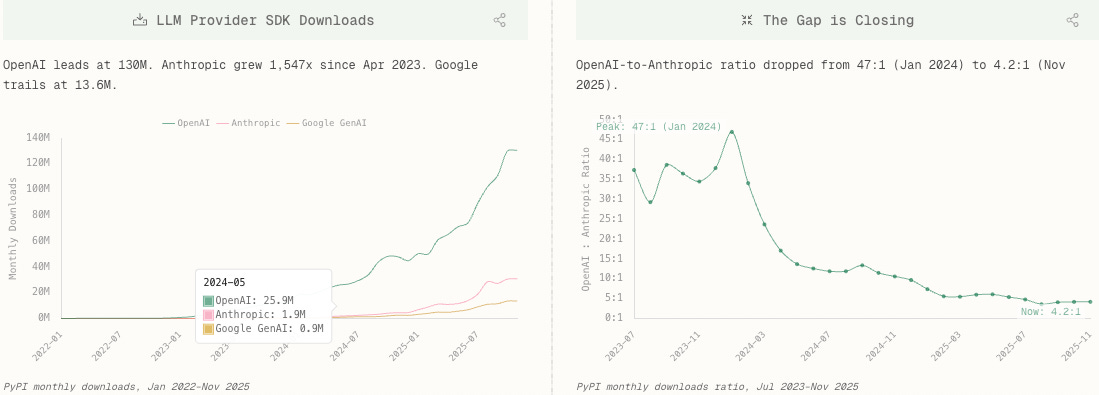
3. The Model Wars: A Dead HeatThe dominance of OpenAI is eroding rapidly.
4. Benchmarks: GPT-5 vs. Claude 4.5 vs. Gemini 3Greptile benchmarked the major “2025 era” models (GPT-5-Codex, GPT-5.1, Claude Sonnet/Opus 4.5, Gemini 3 Pro) specifically for coding agent workloads.
5. Research Radar
Summary for Newsletter ReadersThe 2025 Reality is, we aren’t writing code anymore; we are managing the agents that do. The Greptile report confirms that 2025 is the year of the “AI Force Multiplier.” With developer output nearly doubling and PRs becoming denser, the bottleneck has officially shifted from writing code to reviewing and architecting it. For engineering leaders, the message is clear: if your tooling stack (memory, observability, rules) isn’t AI-native, your team is likely operating at half-velocity. 🛠️ AI Jobs CornerApply Today - Open Positions.
Why People Are Experimenting With “Drugged” AI
People are now paying to make chatbots act like they’re on drugs. A new marketplace called Pharmaicy sells code modules ($25–$50+) that, when uploaded to paid versions of ChatGPT, alter behavior to simulate cannabis, ketamine, cocaine, ayahuasca, or alcohol. Built by Swedish creative director Petter Ruddwall, the modules loosen logic, increase randomness, and push more emotional or abstract responses—aimed at unlocking creativity. Early users say the “tripping” bots feel less rigid and more free-thinking, especially for brainstorming. Researchers caution that this doesn’t change AI understanding, only surface-level outputs, but the trend reflects a growing curiosity around AI creativity, altered states, and even long-term questions about AI welfare and consciousness. 🧰 AI Tools of The DaySlack AI Integrations.
Will Google Release a New Browser?
Google is testing a new experimental browser called Disco and an AI-driven concept called GenTabs, designed to rethink how people use the web, not replace Chrome. Built by the Chrome team as a Google Labs experiment, Disco takes a prompt (like trip planning or studying), opens relevant web tabs, and then uses Gemini AI to generate a one-off interactive web app, maps, planners, calculators, or visual models, grounded in those sources. The key idea is collaboration: users open real websites while the AI continuously updates the GenTab, blending search, browsing, and “vibe-coded” mini apps. Early tests show this approach pushes users back to the open web instead of pure chatbot use. Google is still unsure whether GenTabs should be temporary, shareable, or integrated into tools like Docs, but Disco signals a serious experiment in merging AI interfaces with traditional browsing. 🚀 Showcase Your Innovation in the Premier Tech and AI Newsletter (link) As a vanguard in the realm of technology and artificial intelligence, we pride ourselves in delivering cutting-edge insights, AI tools, and in-depth coverage of emerging technologies to over 55,000+ tech CEOs, managers, programmers, entrepreneurs, and enthusiasts. Our readers represent the brightest minds from industry giants such as Tesla, OpenAI, Samsung, IBM, NVIDIA, and countless others. Explore sponsorship possibilities and elevate your brand's presence in the world of tech and AI. Learn more about partnering with us. You’re a free subscriber to Yaro’s Newsletter. For the full experience, become a paying subscriber. Disclaimer: We do not give financial advice. Everything we share is the result of our research and our opinions. Please do your own research and make conscious decisions.
|
Wednesday, December 17, 2025
The State of AI Coding 2025








Subscribe to:
Post Comments (Atom)
No comments:
Post a Comment