Why AI Is About to Make Your Devices More ExpensivePlus: Why AI Is About to Make Your Devices More Expensive
This is what we have today.
📰 AI News and Trends
Other Tech News
AI to Revolutionize the Olympics and the way we consume Sports
NBC Sports is rolling out a real-time AI player-tracking feature that lets viewers follow specific athletes live on mobile, marking a shift toward personalized sports broadcasts. The system, called Viztrick AiDi, was developed by Nippon Television Network and uses facial recognition to identify players, track their movement, and automatically crop live horizontal feeds into vertical, mobile-first video. Viewers will be able to tap a player in the NBC Sports app and watch a real-time feed centered on that athlete, while traditional broadcasts remain available. The technology has already been used in Japan for live stat overlays and is expected to debut during NBC’s 2026 coverage, including the 2026 Winter Olympics, highlighting how AI is turning sports viewing from one-to-many broadcasts into customizable, athlete-centric experiences. 📚Learning Corner
I’m taking this course, but Lovable is my current vibe coding platform of choice, followed by Cursor. Why AI Is About to Make Your Devices More Expensive
Global AI demand has effectively sold out the memory market, creating what analysts are calling an unprecedented shock. AI chips from Nvidia, AMD, and Google require massive amounts of high-bandwidth memory (HBM), pushing supply far beyond capacity and driving DRAM prices up 50–55% quarter-over-quarter, the sharpest jump on record. Three suppliers, Micron, Samsung, and SK Hynix, control nearly the entire RAM market and are prioritizing AI and data centers, where margins are higher, and buyers are less price-sensitive. Micron alone is “sold out for 2026,” its stock is up 247% year-over-year, and memory now accounts for ~20% of a laptop’s hardware cost, up from ~10–18% in early 2025. The spillover is hitting consumers: companies like Apple and Dell Technologies warn of rising costs and potential price increases. AI has turned memory into the new bottleneck, the “memory wall,” and until new fabs come online in 2027–2030, higher hardware prices look structural, not temporary. 🧰 AI Tools of The Day
I currently use Make and Zapier the most, but I am learning N8N and plan to move some automation there soon. Make is very easy to use, and you can get some automations going in minutes, but N8N, although a bit more complex, is more scalable and cost-effective in the long run
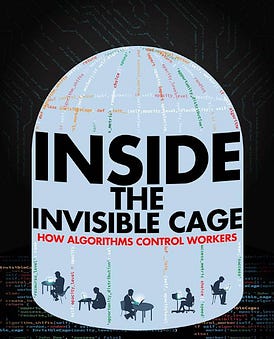
The Technopoly we live in
A new Stanford–Yale study challenges the AI industry’s core legal defense, showing that leading models from OpenAI, Google, Anthropic, and xAI can reproduce copyrighted books with 76%–96% accuracy, including near-verbatim outputs of Harry Potter and 1984. In some cases, entire books were reproduced with 95.8% accuracy, raising serious questions about whether these systems are memorizing data rather than merely “learning” from it. While this may seem like a narrow copyright issue, it points to a broader shift toward technopoly, where a small number of tech companies accumulate unprecedented control through data, scale, and pattern recognition. Firms now hold vast troves of personal and behavioral data, enabling them not only to understand the past and present but to increasingly predict and shape future behavior. Platforms like Palantir illustrate how deeply integrated data systems can be used to map identities, movements, and decisions at a population scale and use all that data against its own citizens (Ice, Ice, Baby). As AI systems grow capable of replicating books, music, software, and even entire businesses, the central question becomes less about innovation and more about power. Who controls these systems, who sets the rules, and how democratic institutions, that’s if democracy still exists as our votes are increasingly manipulated by social media and tech companies that shape opinion and even count the votes, can realistically keep pace with companies that move faster, see more, and know more than any government ever has. Maybe the only solution to freedom from manipulation is to pull the plug, literally. We are being optimized into automated humans. Do we live in a Technopoly?Has power shifted from institutions to platforms?
🚀 Showcase Your Innovation in the Premier Tech and AI Newsletter (link) As a vanguard in the realm of technology and artificial intelligence, we pride ourselves in delivering cutting-edge insights, AI tools, and in-depth coverage of emerging technologies to over 55,000+ tech CEOs, managers, programmers, entrepreneurs, and enthusiasts. Our readers represent the brightest minds from industry giants such as Tesla, OpenAI, Samsung, IBM, NVIDIA, and countless others. Explore sponsorship possibilities and elevate your brand's presence in the world of tech and AI. Learn more about partnering with us. You’re a free subscriber to Yaro’s Newsletter. For the full experience, become a paying subscriber. Disclaimer: We do not give financial advice. Everything we share is the result of our research and our opinions. Please do your own research and make conscious decisions.
|
Monday, January 19, 2026
Why AI Is About to Make Your Devices More Expensive








Subscribe to:
Post Comments (Atom)
No comments:
Post a Comment