Happy Thursday to you! Here are the money topics we'll cover in today's Gist, brought to you by Public.
FAMILY MONEY MATTERSHow to talk to your family about money?
Money talk often feels taboo. The closest of friends and family will share the most intimate details of their lives but zilch when it comes to money. It turns out that less than 10% of US adult siblings discuss money on a regular basis, according to Ameriprise. And when they do, the most common topic is how other family members handle their finances (58%). When you add family dynamics to the mix, emotions can fly high. But what if you have parents who are nearing retirement and you're worried they don't have any money saved? Who will pay for their medical bills? Or worse yet, their funeral costs? Talking to siblings and other family members about money can be productive, especially if you can start early and do it regularly. But, how do you break the ice? Here are 3 tips from the Finny community. Start small to get buy-inLike any other matter, you run the risk of losing focus if you involve too many people too soon. Start with a sibling or a parent to gauge the temperature and get their buy-in. Schedule a discussionOnce you're done with initial warm-ups, consider calling a meeting. If you talk about money only in passing, chances are you won't get much done. Setting a time and a place in advance will make for a more productive discussion. And who should call the meeting will matter more than you think. Force yourself to listenEven if you’re the one leading the conversation, don’t do all the talking. Assume everyone has good intentions and that you’ll all be better off talking about this together. If a discussion gets unproductive or emotional, table it for another time and tackle the stuff you can deal with that day. If you can work through the initial awkwardness, regular open and honest talks can strengthen family bonds and give everyone peace of mind!
SPONSOREDAn investment app doing the right thing
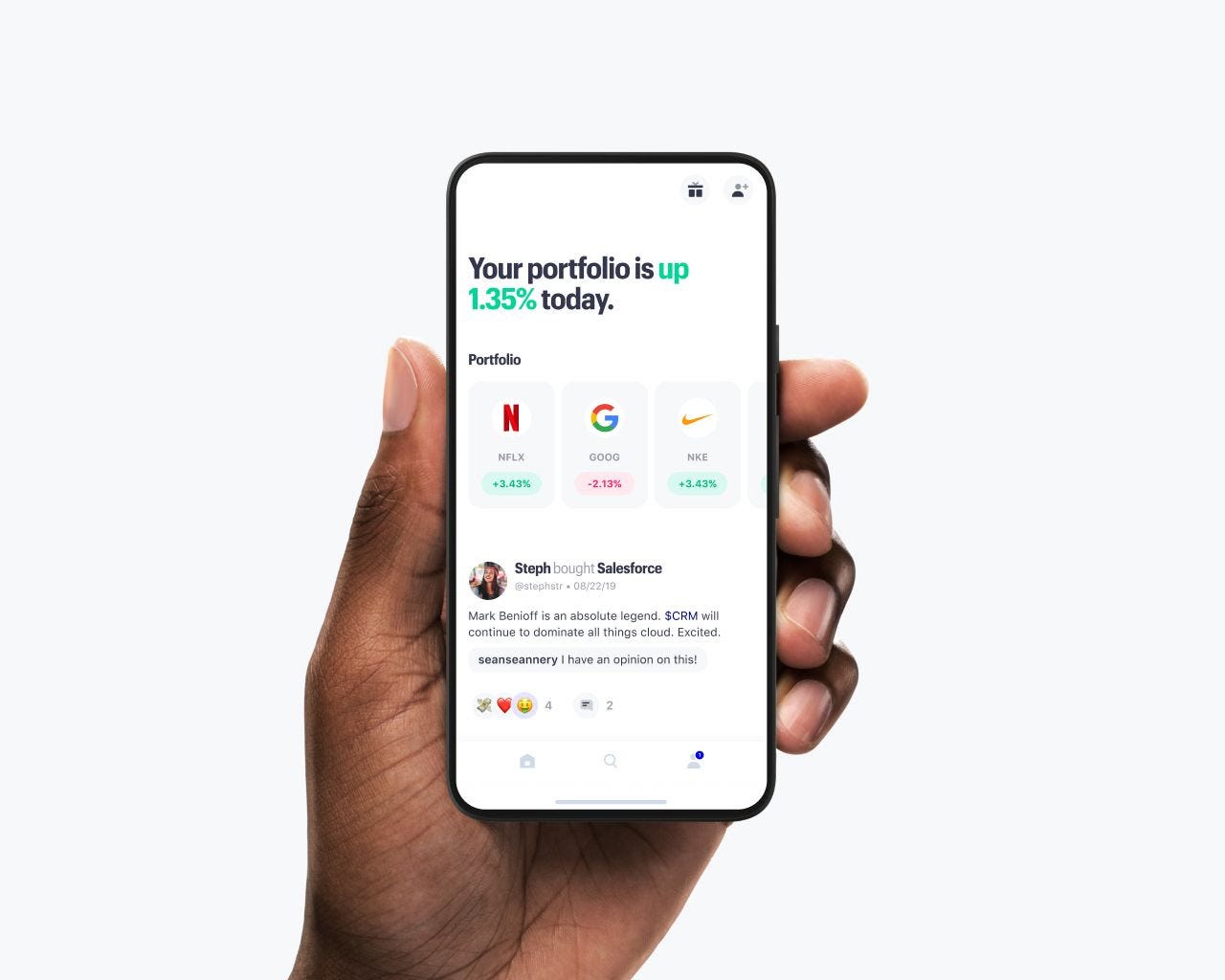
Have you heard the saying, “if you’re not paying for the product, you are the product?” The last two weeks have shed light on the zero commission model and where everyday investors like us fit in. The issue at heart is what’s called PFOF or Payment for Order Flow, a practice already banned in places like the UK and Canada. It’s where brokerage firms are compensated to route their customer’s trading orders to certain market makers to execute the trades rather than directly to exchanges. Because brokers are compensated by market makers, it’s not always clear that the customer is getting the best execution. And that is what creates a potential conflict of interest between the brokerage and the customer. For some brokerages, this conflict of interest is massive based on how much they earn via PFOF. Other brokers offering no commission fees compensated by PFOF are rethinking their business models. In fact, Public, a free investment app, announced this week they will end the practice and shift to optional tipping instead... “Trades will remain commission-free and tipping is entirely optional. Members of the Public.com community can freely decide if they’d like to leave a tip to help pay for the cost of executing their trades. The reality is that there is no such thing as free trades. Transparency is a core pillar of building trust, and we think it's important that we live up to our name." So what does Public offer?🧑🤝🧑 Social investing & sharing. Follow friends and subject matter experts. Opt in to see what others invest in, ask questions, and learn about companies from people you trust. Choose and invest in themes you believe in. ️⚒️ Tools for long-term investors, such as safety labels for riskier investments and long-term portfolios. Public does not allow day-trading and they do not offer sophisticated trading instruments like margin accounts. 🍕 Fractional shares. Public slices stocks up into tiny bits, so anyone can own a piece of the companies they believe in. Sound intriguing? Learn more on Public.com. They are offering you $10 in your Public account with a deposit of $1 or more. FINANCIAL PLANNINGWhen should you sell RSUs?
If you currently hold Restricted Stock Units (RSUs) from work, you may be wondering when you should sell them. Here are some tips from Daria Victorov, a Certified Financial Planner, and Vineet Prasad, an Accredited Financial Counselor, Founder of Savings Academy, and a Coach on Finny. 💡 Taxed when vested. Don’t forget that RSUs are taxable when they vest, even if you don’t sell them! Make sure your company has withheld taxes on your behalf and that it’s enough to cover your future tax bill. 💡 Consider selling as your RSUs vest. Your income and job stability is tied to your company’s performance. It’s risky if your financial assets are also heavily tied to your company’s stock price. Selling your RSUs upon vesting makes sense most of the time, though there are exceptions (e.g., you have more information about your company's financials and think it will perform strongly in the upcoming period). 💡 Manage capital gains. If you sell upon vesting, you’ll face little-to-no capital gains. But if you wait and the stock price rises, consider waiting at least 366 days to sell so you can benefit from long-term capital gains. If you sell your assets earlier, they will be taxed at a higher rate as short-term capital gains. 💡 Make sure you have an intentional plan for your RSUs. Employees at companies like Google, Facebook, and Amazon who kept their RSUs have recently benefited tremendously. But past employees at places like Yahoo, AOL, and Bear Stearns may wish they had sold as they vested. For more RSU insights, check out this interview with Daria and Vineet. ✨ TRENDING ON FINNY & BEYOND
That’s it for today. If you’ve enjoyed today’s edition, please invite your friends to join Finny. Have a great weekend ahead! The Finny Team
If you liked this post from Finny: The Gist, why not share it? © 2021 FinnyNL Unsubscribe
|
Thursday, February 4, 2021
💸 The reality of free trades










Tuesday, February 2, 2021
Want to Sell Your Film to Amazon/Netflix?
|


⚔️ Main Street vs. Wall Street
Happy Tuesday! To make this week a little brighter, our insurance partner, Avibra, is offering our members and readers insurance coverage at no cost to you—learn more about it below! Here are the topics we'll cover in today's issue:
If you're receiving The Gist in your Promotions folder, consider moving it to your Inbox, so you don't miss any future issues! BANKINGIf you think safe deposit boxes are safe, think again.
Bank safe deposit boxes are far from a sexy topic these days. But get this: no federal laws govern these so-called highly secure boxes. There are 25 million such boxes in the US and they operate in a legal gray zone despite the highly regulated banking industry, according to the NYT. If you or someone you know has a safe deposit box, please read on. 🔓 Banks generally don't carry insurance to cover losses to safe deposit box renters. Most safe deposit lease agreements deny any liability by the bank. 🔓 Banks often cause losses incurred by customers. When a bank closes or moves a branch, it will drill open the box. The contents are put in a cardboard box or an envelope which is brought to a new location. 🔓 A box will be drilled open when the bank loses contact with a customer. 🔓 If the rental fee isn’t paid on time, the bank might drill the box and put the contents in storage until someone claims the belongings. 🔓 If a bank is negligent and causes losses, it has no legal obligation to compensate its customers. Banks rarely have insurance covering losses of box contents. So what should you do?A safe deposit box often isn’t the best place to store important documents, such as a will, or other valuable items, like jewelry. In fact, it's becoming harder to rent a box because many banks are closing their branches and ending such deposit box services. For many banks, the service is also unprofitable. If you want to share digital documents with your families such as wills, trusts, insurance health cards, passports, and tax returns, you're much better off with services such as Pillar, which acts as a digital vault. After all, we live in a digital age! INVESTINGMain Street vs. Wall Street. Who will come out unscathed?
The saga on The Street is no joke. At the center of this is the battle of the people versus the establishment. Will anyone come out of this unscathed? In case you haven't closely followed the Gamestop saga, here is a simple recap:
Who's riding the surf🏄🏿♀️Fidelity, Public, TD Ameritrade 🏄🏿♀️ Retail investors who sold for a profit Who's wiping out🌊 Robinhood. They grew to symbolize the antithesis of Wall Street, but now we know they rely heavily on Wall Street. 🌊 Hedge funds forced to cover their shorts 🌊 Retail investors who bought at the top Our 3 takeaways💡 The saga raises tricky questions about market efficiency, financial stability, and regulation. Class action lawsuits have only just begun and congressional hearings will kick off endless regulatory chatter, scrutiny and "reform." 💡 The round trip will be inevitable for these fearless retail investors. But the YOLO movement is for real and here to stay. No doubt we'll be hearing heart-wrenching stories from retail investors on both extremes in the coming months. 💡 Do your research before investing in a specific stock. A soaring stock price in a matter of days doesn't mean it's a buy, quite the contrary. Business fundamentals matter. Don't let FOMO and greed take over when investing. HOUSINGWhen should you sell a home and rent instead?
The coronavirus pandemic is responsible for a dramatic change in the way the world lives and works. Remote work is no longer just an experiment—it's a new reality—with nearly seven in ten employees working their jobs from home. Since the pandemic started, 16 million people in the US have moved, per USPS. For those owning a home, when does it make sense to sell your primary residence and rent instead? Here are a few insights we gleaned from the Finny community. Renting is cheaper than owning in most of the countryThat's particularly true now, as real estate prices are steadily rising across the country, while rents are declining in many big cities (most notably, in New York and San Francisco). As a matter of fact, it's cheaper to rent than buy in most of the United States. So why not take advantage of the housing market and rent? Selling can help you become debt-freeIf you're swimming in debt, unloading the financial burden of your mortgage may be the right solution. Do take the time to consider all your options since a home can be an emotional possession. Selling can help you with budget limitationsThe pandemic has been tough on many people. If you find yourself unemployed and don't have many options for finding work fast, selling your home and renting instead will ease the pressure on your budget, especially if you have built up equity in your home. In this case, consider moving to a less expensive rental. Renting is the norm for digital nomadsDigital nomadism is on the rise. For those people who can afford to work in any country or city in the world, and have an appetite for a nomadic lifestyle, selling their home and renting means additional freedom and one less thing to worry about. Interested in discussing this topic? Chime in on the thread below.
✨ TRENDING ON FINNY & BEYOND
That’s it for today. If you’ve enjoyed today’s edition, please invite your friends to join Finny. Have a great rest of the week! The Finny Team
If you liked this post from Finny: The Gist, why not share it? © 2021 FinnyNL Unsubscribe
|