Thursday, November 3, 2022

ðŸĨ— Mixed signals

November 03, 2022 View online | Sign up
Finny
Gist
TOGETHER WITH Finny

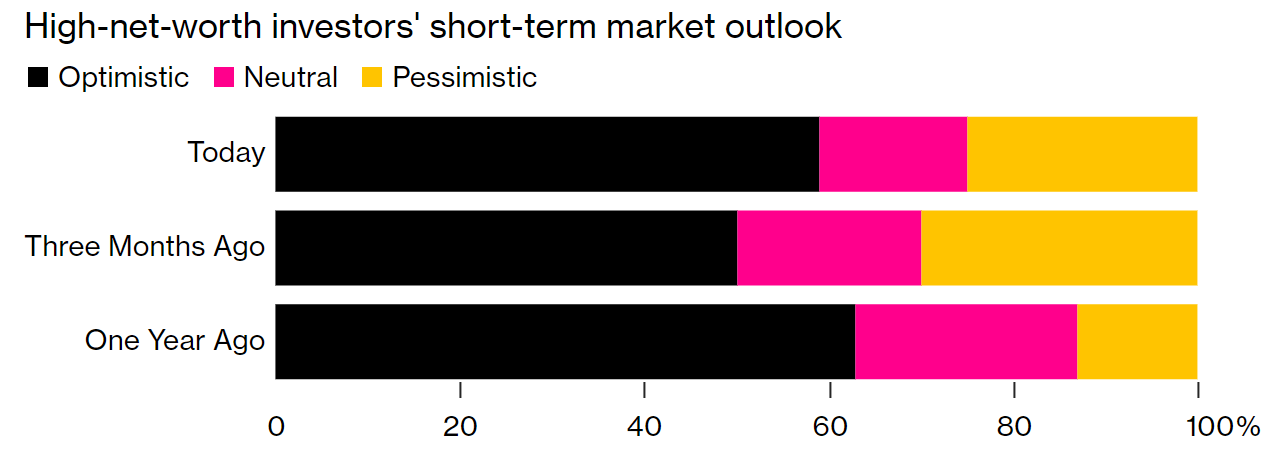
Good day! There's a looming recession in the US, the Feds continue to fight inflation as they hike rates by another 0.75%, war rages on and a new Covid variant is rearing its head just in time for the cold season. The list goes on and on. Given that, can you guess what percent of rich investors are optimistic about the short-term outlook for the stock market? a. 49%, b. 59%, c. 69%. Follow the wave ðŸŒŠ below for the answer.

Here are the money & investing topics today:

  • Mixed signals
  • Investors are lining up for the quirky ETFs
  • Refinancing your student loans: pros & cons    

ECONOMY

Mixed Signals

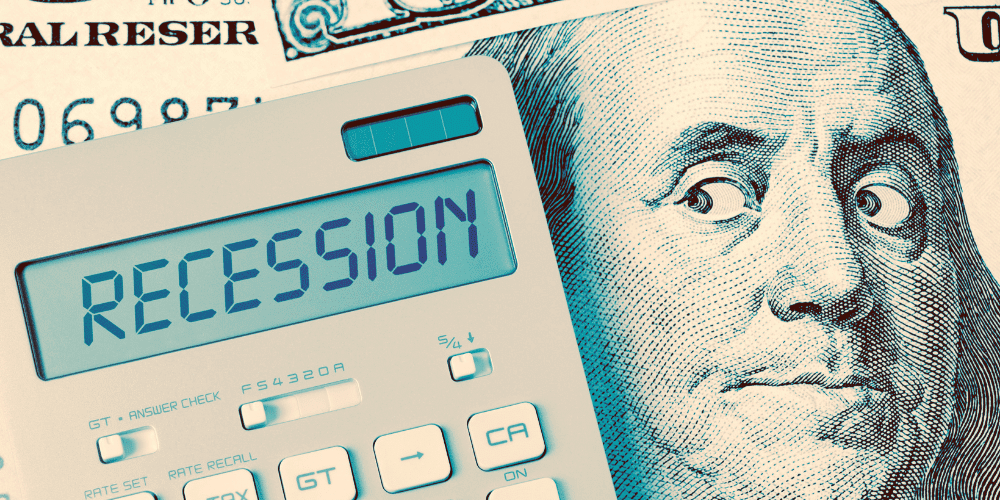
2022 has been a year of mixed signals when it comes to the economy. High inflation, yet resilient spending. Rising rates, but low unemployment. A down market, and still record earnings for many businesses. 

So naturally, just as many economists begin calling for a certain recession in 2023, we've been handed yet another conflicting indicator — a sizable beat on our Q3 GDP projections. 

Taking a look under the hood

  • The GDP numbers: After decreasing by -2.2% through the first two quarters of the year, US GDP bounced back by 2.6% in Q3 alone, surpassing most projections and putting us at a slight gain on the year. However, inside that number were signs of a slowdown in areas like consumer spending, business spending, and residential investment — meanwhile, net exports were the leading driver. 
  • Economic counterparts: Inflation remains high, but we did see some alleviation as sub-categories of inflation like the chain-weighted price index rose only 4.1% —below its projected 5.3%. But it's not all positive. Home sales continue to decline as mortgage rates top 7%, many private measures of economic activity also fell, and we're expecting to lose 175,000 jobs per month in Q1 of 2023 as 98% of CEOs brace for a recession. 
  • The collective picture: With most of the recent quarter's GDP growth coming from temporarily boosted exports, slowing consumer spending combined with high inflation and equally high rates will likely weigh on the coming quarters' GDP metrics.

The takeaway?  

These conflicting numbers and observations only leave us with one certain observation — uncertainty. It's always hard to predict the future, but this environment is proving exceptionally challenging to forecast. 

Expect the best and prepare for the worst. Shoring up our financials, skills, and knowledge as much as possible is our best defense against more pain that may come, and an invaluable chance for personal progress no matter the outcome.

Take this related lesson on this topic and earn Dibs ðŸŸĄ while you're at it:

INVESTING

Investors Are Lining up for The Quirky ETFs

Exchange-traded funds (ETFs) are one of the market's simplest packages to choose from. With their ability to track a basket of assets without buying individual stocks and their low-cost nature, ETFs are the investor's sweetheart and are found in almost any portfolio. 

But even these simply packaged investments have some tricks up their sleeve, and their usual bland safety can quickly be turned into tempting volatility with a few modifications. 

The dominance of ETFs continues

  • Leading the pack: ETFs have skyrocketed in popularity lately. After a significant boost of $1.6T and hundreds of new funds in 2021 alone,  there are now over 8,000 funds available globally holding more than $7.1T in assets while accounting for around 20% of market volume on any given day. Needless to say, these guys are popular. 
  • New flavors allure: In 2022, inverse and leveraged ETFs have established themselves as a strong subcategory of this group as investors dumped over $25B into these risk-on funds, representing 6.1% of all ETF fund flows this year and far beyond the previous record of $17B set back in 2008. 
  • Inverse & leveraged 101: As you might infer, inverse ETFs are curated to capitalize on losses. For example, if the S&P 500 Index drops, the inverse ETF tracking the index rises. The mechanics behind this are complex but are accomplished usually using various derivatives (i.e., swaps, futures, and options contracts). Leveraged ETFs work much the same and are used to amplify the returns of the underlying index. 
  • What we need to know: These funds are inherently contrary to the motion of the market in long-term time frames. They're designed for traders, speculators, large account managers, and anyone seeking a temporary hedge or opportunistic profit chance. They're meant to be held for a short period, and holding a fund like this for any length of time is risky.

They're not going away 

The rise in popularity of these colorful funds can partially be attributed to the increased interest in active trading we've seen in recent years that's still trickling in, but also an ongoing bear market that's ripe with opportunities presented by heightened volatility. 

Despite a down market, fund curators aren't going to lose their creative zeal overnight, nor are investors losing their appetite for more unique options like these inverse and leveraged varieties. Expect to see more and more eccentric choices arriving in the coming years, even if they're red ones.

Take this related lesson on this topic and earn Dibs ðŸŸĄ while you're at it:

FEATURING EQUI

When it comes to investing, the past few years have been dizzying. Inflation, tech booms, tech busts, skyrocketing borrowing costs, COVID – you name it, and our portfolios have lived through it all (and sometimes just barely). 

And that volatility is all the more reason to try something new: Liquid alternative strategies.

  • Equi makes it possible to access alts by using sophisticated data science and robust manager due diligence to compile a diversified portfolio of niche liquid alternative investments.
  • Their risk management constantly monitors and rebalances the underlying strategies and applies hedges to help protect against downside risk.
  • The result? Equi is designed to compound capital through various market cycles, including during the highly volatile periods we're experiencing now – evidenced by Equi's outperformance of the S&P 500 since inception.

There is a waitlist though, and The Gist by Finny readers will get a first look.

*See disclosure below

MANAGING STUDENT DEBT

Refinancing Your Student Loans: Pros & Cons

Spread amongst about 48 million borrowers, Americans are collectively indebted more than $1.75 trillion (about $1.25T after forgiveness) to student loan lenders across the country, and about 94% (45.4M) of those borrowers owe federal student debt.

Even in light of the pending forgiveness plan, millions of Americans will still be sitting under mountains of student loan debt after the fact. These payments are hard to make for many, and the accruing interest can eat you alive in the process. If you find yourself in a situation like this, it might be time to beg the question — is it worth refinancing?

What to know about refinancing

  • The basics: For most Americans who are federal borrowers, you can't refinance a federal loan — doing so would require refinancing with a private lender, thus changing your loan type. Whether or not this is worth it depends on the details of your federal loans. As for those with private loans, refinancing is a more straightforward process. 
  • The pros: The pros of refinancing your student loans are mostly convenience-oriented. Doing so allows you to change your repayment period to something that works best for you, group your loans into one simple package, lower your monthly payments, or even do so with a co-signer. 
  • The cons: The cons here can be detrimental if not considered carefully. For one, refinancing your federal student loans at the wrong time could mean missing out on the forgiveness plan, or giving up considerations like the income-driven repayment option. For both private and federal borrowers, refinancing could also result in a higher rate, lengthen your repayment timeline and weigh down your credit, or you may not be eligible at all.

Take this related lesson on this topic and earn Dibs ðŸŸĄ while you're at it:

ðŸ”Ĩ TODAY'S MOVERS & SHAKERS

  • Etsy (+13.7%) as the online crafts marketplace reported better-than-expected quarterly earnings.
  • Lincoln National Corp (-31.9%) as the financial services company reported a $2.6 billion quarterly loss amid reserve and goodwill impairment charges.
  • S&P 500 Index (-0.4%) to $3,742.81 (1D)
  • Bitcoin (+0.6%) to $20,264.80 (1D)
  • Ethereum (+1.7%) to $1,544.30 (1D)

This commentary is as of 10:20 am PDT. 

🌊 BY THE WAY

  • 🌞 Answer: 59% of rich investors told UBS Group AG they are optimistic about the short-term outlook for the stock market. They cite strong demand for goods and services, a return to normalcy post the Covid-19 pandemic and healthy corporate earnings (Bloomberg)

  • 🐔 Chick-fil-A's four-day weekend experiment for workers (NY Post)
  • ðŸŠĪ ICYMI. BOGO & the retail trap (Finny)
  • ðŸ’Ą Current administration to provide over $13 billion in aid to help American families lower energy bills (CNBC)
  • ⚕️ Finny lesson of the day. Since many companies are going through their benefits open enrollment now or very soon, here's a lesson related to helping you decode a work benefit:

Disclosure

Equilibrium Ventures, LLC is registered as an investment adviser with the Texas Securities Board Investment Advisers Act of 1940. Registration of an investment adviser does not imply any specific level of skill or training and does not constitute an endorsement of the entity by the Securities Exchange Commission. The information provided should not be construed as investment, legal, tax, or trading advice and they are not meant to be a solicitation or recommendation to buy, sell, or hold any securities including funds mentioned. Any such offer or solicitation can only be made by means of the delivery of a Confidential Private Placement Memorandum to qualified eligible investors. 

Past performance is not indicative of future results and an investment in an investment fund involves the risk of loss. The investment fund is speculative and involves a high degree of risk. Before investing in the fund, you should thoroughly review the offering documents with your legal, tax and investment advisors to determine whether an investment is suitable for you in light of your investment objectives and financial situation.

References to S&P 500 are included for illustrative purposes only. It is not expected that funds will make investments in S&P 500 companies. Funds are expected to invest with a strategy that is different from a strategy of making equity investments across an index. Accordingly, investors should not expect that an investment would provide exposure that is similar to an index investment in S&P 500 companies or any other specific benchmark.

About Finny

Finny is a financial wellness platform on a mission to make your money work for you. The Gist is Finny's twice-a-week (Tues & Thurs) newsletter covering personal finance & investing insights and money trends. The content team: Austin Payne, Carla Olson, Chihee Kim. Finny does not offer investment and stock advice.

Please support our brand sponsor⁠—Equi—as they make rewards on our platform possible. If you're interested in sponsoring The Gist, please reach out to us. And if you have any feedback for us, please contact us.

© Finny 2022. All rights reserved.
736 Paloma Ave, Burlingame CA 94010

Tuesday, November 1, 2022

💚 Buckle up

November 01, 2022 View online | Sign up
Finny
Gist
TOGETHER WITH Finny

Good Tuesday. The Dow Jones Industrial Average gained 13.95% last month. That was the best month for the Dow since: a. 1976, b. 1996, c. 2006. Follow the wave ðŸŒŠ below for the answer.

Today's money topics are:

  • Recession predictions round two
  • Some hidden features of your 401(k)
  • The day trading frenzy is done

ECONOMY

Recession Predictions Round Two

The US economy technically entered into a recession this summer as our GDP notched its second consecutive quarterly decline. Most Americans agree we're in one, but here's the thing — most economists don't. While 76% of everyday people said they believe we're in the midst of a recession, only 11% of economists said the same. 

Although the legitimacy of being in a "real" recession is still in question by the pros, they do seem to be expecting a noteworthy drawdown in 2023 with some high levels of certainty. 

So, what's the update?

  • Looking ahead: In July, the average economist forecast saw GDP grow by 1.8% during the first 6 months of the year, but more recent guesses call for a decline of -0.3% during that time — a downward adjustment of -2.1%. Meanwhile, 72% of polled economists believe we'll hit a recession in the next 12 months, and a vast 98% of CEOs think we'll see one by mid-2024. 
  • The consequences: Most analysts agree that rising rates will knock at least 2% off GDP growth next year, further dampening it into 2024. Elsewhere, the tight labor market is expected to loosen as unemployment is projected to rise to about 4.7% by the end of next year — up from 3.5% in September. This might hurt a bit. 
  • The underlying causes: If we're being honest, this largely comes down to one thing — inflation. It's the number one factor right now and causing a litany of downstream ripple effects that may last years. Because of this, rates are rising rapidly and causing more pain in the process as the Fed tries to force the economy to take its medicine. 
  • Context on recessions: A recession is one of those terms that, although it does have a generally accepted definition, there's no one definitive way to prove it's here, until well after the fact. Because economists technically need to see two consecutive quarters of contracting GDP to call it, a recession is usually announced at least six months after its actual onset. Once it's determined that we're actually in a recession, that's probably about the time we're headed for a recovery.
  • The big picture: 2022 has already been a tough year for the finances of the world, and these forecasts for the future aren't exactly consoling either. Going into 2023, we should expect contractionary monetary policy to show its ugly side as jobs, earnings, and prices all take a hit. In short, buckle up, this might be a turbulent landing.

Take this related lesson on this topic and earn Dibs ðŸŸĄ while you're at it:

RETIREMENT PLANNING

Some Hidden Features Of Your 401(k)

You know how retailers like Starbucks have these "secret menus" that you can get something unique from if you ask really nicely? 

The thing is though, that so-called "secret menu" is just some pre-optioned customizations made popular by coffee enthusiasts, and you can kind of do the same thing with your 401(k), except instead of coffee enthusiasts making these options available, it was, well... some lawmakers. 

So, what are some of those hidden features?

1️⃣ Rule of 55: Technically, the age at which you're supposed to be able to withdraw from most US retirement accounts penalty-free is supposed to be 59.5. On the record, that's true, but also not. There's an exception to this rule, and it states that if you leave a job the year of your 55th birthday or thereafter, you can access the funds in that employer's 401(k) penalty-free. And yes, it's real, it's on the IRS's official list of exceptions

2️⃣ Roth 401(k) deferrals: The Roth cousin of your traditional 401k comes with many benefits. 

  • Here's how it works: With a Roth 401(k), you are contributing after-tax money into the account, which means that your contributions are made with money you've already paid taxes on. So when it's time to withdraw those funds in retirement, you get the tax benefit of owing no taxes. Usually, Uncle Sam will tax you only once. 
  • How to decide which to go with? Consider your current tax situation and your anticipated tax situation in retirement. Generally speaking, you'll want to choose a traditional 401(k) if you expect your tax rate to decrease in retirement and the Roth option if you expect it to go up.
  • A Roth 401(k) also boasts a contribution limit that's $14,500 more than a Roth IRA (Individual Retirement Account) in 2022.

3️⃣ Self-directed accounts: Like most things, retirement investing and their subsequent accounts come with the necessary evil of rules and regulations we must follow to make the game, if you will, fair for everyone. Although those guidelines and limitations are there mostly to help, they can also limit us in a bad way too. That's where self-directed accounts come in, and they essentially remove the governor from the engine of retirement investing, allowing you to truly open it up. That means, with a self-directed account, you'll no longer be limited to typical investment vehicles (i.e., a menu of say 20-35 mutual funds), and would have access to things like ETFs, crypto, real estate, commodities and precious metals, or even foreign currencies if your brokerage firm has these options available.

4️⃣ Roth Conversions: In a Roth account, you contribute your after-tax money and pay no taxes when it's time to withdraw. 401(k)s, on the other hand, allow you to deduct your contributions today, but you'll pay taxes when you withdraw. And well, sometimes we change our minds, and that's why Roth conversions exist. You can convert your traditional 401(k) to a Roth, and pay the necessary taxes on that so you pay no taxes later when you withdraw from it.

  • Why would you do that, though? Because in the future not only would your balance likely be higher resulting in more taxes, but if you suspect you'll be in a higher tax bracket later in life, it might make sense to take a smaller hit now rather than a heftier one later. 


FEATURING FINMASTERS

A Dollar-a-Day: Understanding The Power of Compounding Interest

One of the best things you can do in investing is to invest consistently—put some money into the stock market every day or every month.

Many have struggled to understand this concept, so that's why the team at FinMasters came up with an illustrative calculator called a Dollar-a-Day. This calculator allows you to visualize the return you'd be generating had you consistently invested a dollar each day since your birth date. 

Dollar-a-Day illustrates the power of compounding interest—a key rule in investing. Some people call it math magic.

You can use this calculator to show your family and friends that investing a small chunk of money every day can help you build fortune over time. In fact, that's how many people get rich.

Check out Dollar-a-Day by FinMasters. It's fun, educational, and totally free.

INVESTING

The Day Trading Frenzy is Done

Markets have traditionally belonged to the big players. Only within the last couple of years have we seen that trend briefly buckle under the pressure of individual buyers. However, the day trading fire lit by retailers seems to have recently burnt to its embers. 

The drought

  • Transactions: Brokerages across the landscape are reporting noteworthy drops in individual account activity. Charles Schwab reported their lowest quarterly transaction volume (5.52M) in Q3 since they acquired TD Ameritrade back in 2020, Morgan Stanley saw retail trades drop 16% from this time last year, and new-era brokerages like Robinhood have seen significant drops in their trading revenue over the last 12 months. 
  • Market conditions: Broad market conditions have played a large role in flushing out a lot of individual traders from the playing field. All main indexes have been battered, with the tech-heavy Nasdaq leading the way at -30%. And many of the stocks that were popular among retail investors, not to mention crypto, have suffered a beatdown, further nudging traders out. 
  • Interest waning: Progress, like most things, comes in cycles. While it's good to know individuals are now intrigued by investing more than ever, it's undeniable that these last couple of years were unsustainable. A lot of progress was made during that time though, and we've learned a lot in the process.

The trader's outlook

The market's outlook for the next 3-6 months is a rather bleak one, and that puts a significant damper on the vigor of retail traders. As long as we find ourselves in the depths of these gloomy conditions, individual trading activity will likely remain lower. 

That being noted, our current situation is a precarious and moody one, meaning the winds could shift at almost any given moment. 

FEATURING THE AVERAGE JOE

Imagine it's 2023…

Inflation has peaked. The Fed stops raising interest rates. Markets have finally bottomed and a new bull market starts.

Over 36,000 investors will be ready since they read The Average Joe — one of the most engaging and concise investing newsletters — filled with market insights, trends and ideas.

Here's how one reader feels: "I enjoy the humor including memes, the info-rich one-liners, the more in-depth articles and the interesting charts. Thanks! A nice job in a short form that I like."

Get the next issue for free here.

ðŸ”Ĩ TODAY'S MOVERS & SHAKERS

  • Abiomed (+50.1%) as the maker of heart, lung and kidney treatments agreed to be acquired by Johnson & Johnson for $16.6 billion or $380 per share.
  • Goodyear (-15.3%) as the tire maker missed Q3 earnings estimates due to higher costs and the strong US dollar.
  • S&P 500 Index (-0.5%) to $3,851.20 (1D)
  • Bitcoin (-0.4%) to $20,413.00 (1D)
  • Ethereum (-0.1%) to $1,570.69 (1D)

This commentary is as of 9:00 am PDT.

🌊 BY THE WAY

  • 🗓️ Answer: 1976. Markets made a huge comeback in October. The Dow guided those gains, soaring 13.95% for the month. The 30-stock index finished its best month since 1976 as investors bet on more traditional companies, like banks, to lead the next bull. The S&P and Nasdaq gained about 8% and 3.9%, respectively, for October (CNBC)
  • ☕ Starbucks secret menu drinks & how to order them (Coffee At Three)
  • ðŸĶ ICYMI. Protect Your Savings From Inflation With Series I Bonds Yielding 6.89% (Finny)
  • 🚀 Job openings surged in September despite Fed efforts to cool the labor market (CNBC)
  • 🔎 Corporate America watches as NY's salary transparency begins tomorrow (Gizmodo)
  • Finny lesson of the day. Since many companies are going through their benefits open enrollment in the fall, here's a lesson related to helping you decode a work benefit:

Finny is a financial wellness platform on a mission to make your money work for you. The Gist is Finny's twice-a-week (Tues & Thurs) newsletter covering personal finance & investing insights and money trends. The content team: Austin Payne, Carla Olson, Chihee Kim. Finny does not offer investment and stock advice.

Please support our brand sponsor⁠—Finmasters—as they make rewards on our platform possible. If you're interested in sponsoring The Gist, please reach out to us. And if you have any feedback for us, please contact us.

© Finny 2022. All rights reserved.
736 Paloma Ave, Burlingame CA 94010