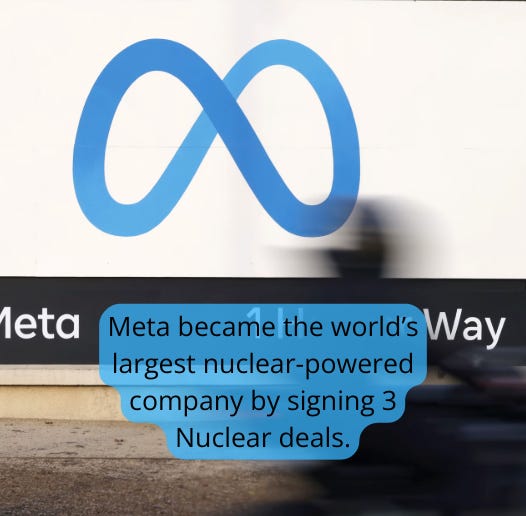
Hello everyone, Global computing is exploding, with only power and capital as real constraints, but not for long. Tech companies obviously are making moves to take these hurdles down, recently Meta did just this, by signing three nuclear power deals to lock in electricity for decades, ensuring its AI data centers can run nonstop at a massive scale, and ICE can track your every move and maybe your conversations and text via your cell phone by accessing commercial apps, raising serious questions about privacy, surveillance, and oversight. Let’s dive in and stay curious.
📰 AI News and Trends
Other Tech News
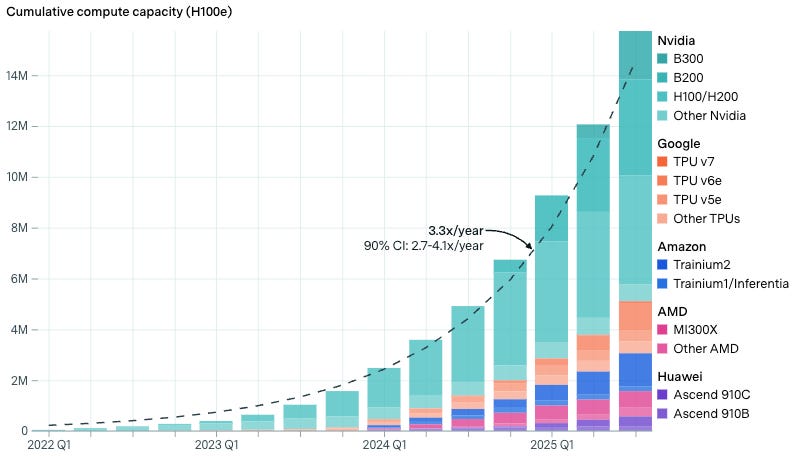
Global AI compute is exploding
Global AI computing capacity has been growing ~3.3× per year since 2022, which means total available compute doubles roughly every 7 months (90% confidence range: 6–8 months). Key numbers
Who controls the compute
Compute is scaling faster than most AI efficiency gains, but model capability is increasingly constrained by capital and power, not algorithms. 🛠️ AI Jobs CornerApply Today - Open Positions.
Meta Bets on Nuclear Power as the New Bottleneck for Scaling Frontier AI
Meta is securing its AI future by locking in nuclear power at a massive scale, signing deals with TerraPower, Oklo, and Vistra to supply up to 6.6 GW of clean energy by 2035, enough to power ~5 million homes. The electricity will fuel Prometheus, Meta’s 1-GW AI data center cluster in Ohio, coming online this year, with additional capacity from new Natrium reactors, existing nuclear plants, and a planned 1.2-GW nuclear campus. As AI data centers strain the mid-Atlantic grid and push up power costs, Meta is betting that always-on nuclear energy, not chips alone, will be the decisive constraint for scaling frontier AI. 📘Learning CornerLearning resource for distributed systems powering frontier AI
ICE expands phone surveillance using commercial data
U.S. Immigration and Customs Enforcement is deploying two new surveillance tools, Tangles and Webloc, that can monitor entire neighborhoods, track mobile phones over time, and follow device owners from work to home. The systems rely on commercial location data sourced from hundreds of millions of phones via Penlink and, under ICE’s internal legal analysis, can be queried without a warrant. This…
The American Civil Liberties Union warns that the tools create detailed behavioral maps of individuals, calling them dangerous in the hands of an agency with limited oversight. The episode underscores how commercial data markets are increasingly powering government surveillance, often outside traditional warrant requirements. Is this even legal? 🧰 AI Tools of The DayDistributed systems tools built for scaling frontier AI workloads
🚀 Showcase Your Innovation in the Premier Tech and AI Newsletter (link) As a vanguard in the realm of technology and artificial intelligence, we pride ourselves in delivering cutting-edge insights, AI tools, and in-depth coverage of emerging technologies to over 55,000+ tech CEOs, managers, programmers, entrepreneurs, and enthusiasts. Our readers represent the brightest minds from industry giants such as Tesla, OpenAI, Samsung, IBM, NVIDIA, and countless others. Explore sponsorship possibilities and elevate your brand's presence in the world of tech and AI. Learn more about partnering with us. You’re a free subscriber to Yaro’s Newsletter. For the full experience, become a paying subscriber. Disclaimer: We do not give financial advice. Everything we share is the result of our research and our opinions. Please do your own research and make conscious decisions.
|
Monday, January 12, 2026
📍ICE can track your phone and your every move







Monday, January 5, 2026
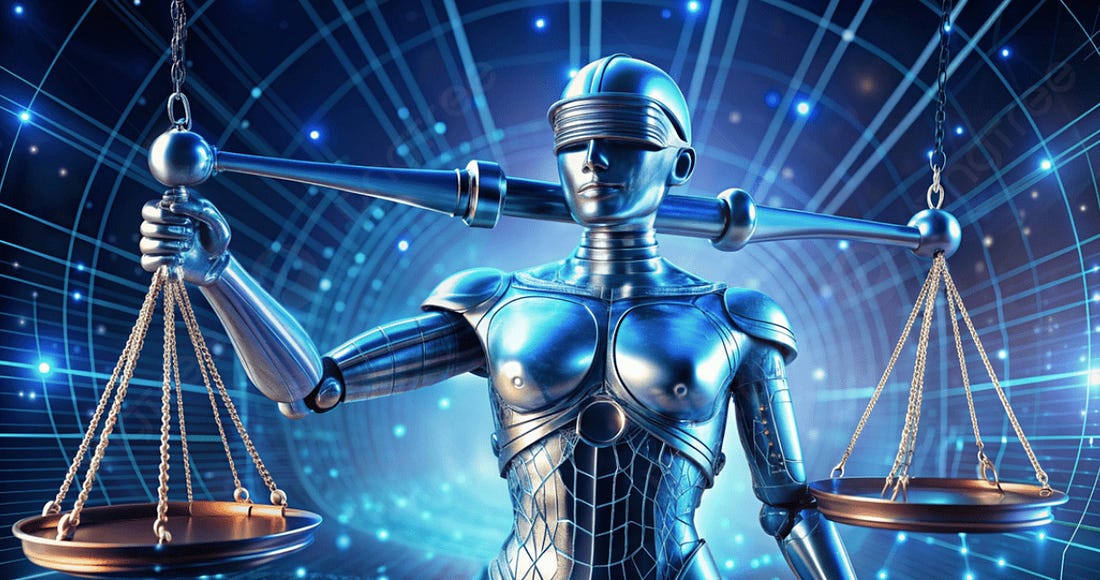
⚖️Can Old Laws Protect New Tech and Us?
Happy New Year, team. We’re back with renewed energy and a sharp focus on researching and delivering the most thoughtful, data-driven AI and tech insights, word for word. Today’s issue breaks down how NPUs are changing the AI hardware game, why inference, not training, is shaping 2026, and whether outdated laws and a rigid judicial system can realistically protect citizens from powerful, fast-moving tech giants. Let’s dive in and, as always, stay curious.
📰 AI News and Trends
Other Tech News
Can Old Laws Protect New Tech and Us?
As 2026 approaches, courts are bracing for a wave of high-stakes lawsuits that will test the application of decades-old laws to modern technology, particularly AI, algorithms, and digital platforms. Key cases span AI-driven price-setting software accused of enabling illegal collusion, copyright battles over training AI models on code and creative works, privacy suits applying 1960s wiretapping laws to online tracking tools, and massive litigation against social media and gaming companies over alleged addiction and mental-health harms to minors. With thousands of cases consolidated nationwide and potential statutory penalties reaching billions of dollars, these disputes won’t just decide winners and losers; they will define the legal rules of the digital economy, clarifying where innovation ends and liability begins when algorithms, platforms, and data cross the line. The real question is whether laws, and the lawyers who interpret them, are capable of keeping pace with rapid technological change. Can a legal system built on slow processes, rigid frameworks, and legacy thinking truly adapt to regulate AI, data, and digital platforms in a way that protects users, minors, and less-informed citizens without suffocating innovation? If the law cannot evolve beyond red tape and narrow interpretations, it risks either failing to prevent harm, such as data misuse and behavioral manipulation, or overcorrecting in ways that discourage entrepreneurs from building the next generation of technology. 🛠️ AI Jobs CornerApply Today - Open Positions.
What NPUs Are and Why They Matter
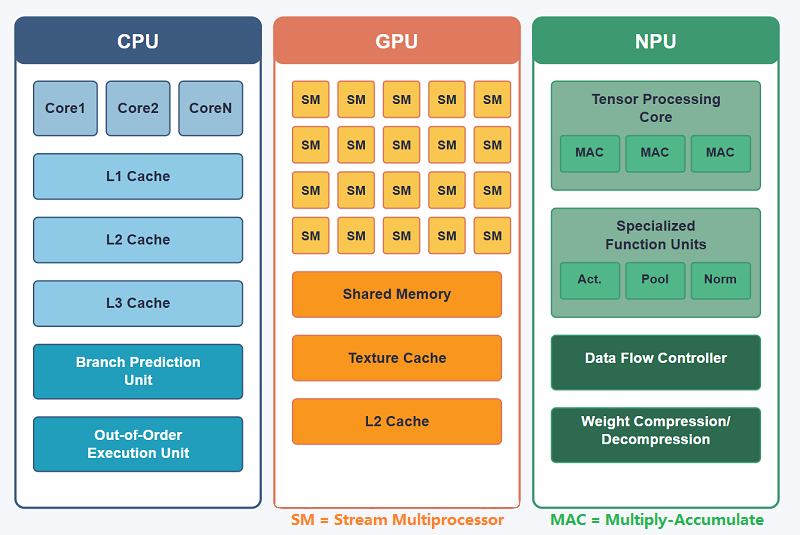
Neural Processing Units (NPUs) are specialized chips built specifically to run AI models efficiently, especially during inference, the phase where trained models are actually used. Unlike GPUs, which are general-purpose and power-hungry, NPUs are optimized for neural-network math like matrix multiplication and tensor operations. The result is 2–10× better performance per watt for common AI workloads, according to industry benchmarks. This efficiency matters because inference already accounts for ~60–70% of total AI compute costs in production systems, and that share is growing fast as AI moves into phones, cars, cameras, and enterprise apps. In short: GPUs train AI, NPUs run AI at scale cheaply, quietly, and everywhere. 📘Learning CornerInference
The Business of NPUs and the Shift to Inference
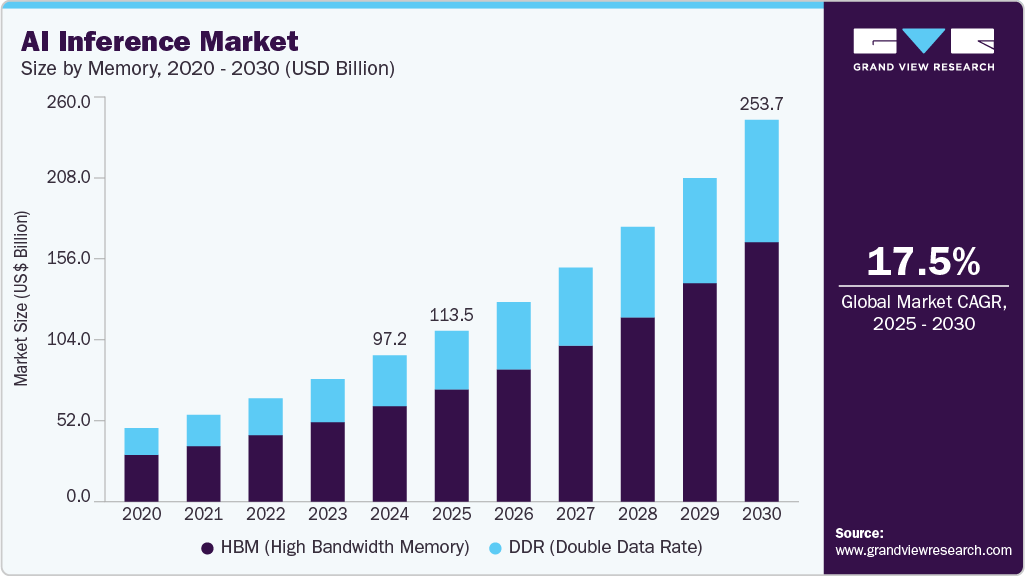
The AI chip market is entering its next phase: inference-first economics. Training large models still favors Nvidia’s GPUs, but inference is where volume lives, billions of daily requests, tight latency budgets, and exploding energy costs. This is why companies are racing to build their own silicon. Google runs AI on TPUs, Amazon deploys Inferentia and Trainium on AWS, and Meta designs in-house chips to power feeds for billions of users. Startups like FuriosaAI and Groq are betting that faster, cheaper inference will unlock real margins. The stakes are high: inference spending is projected to surpass training spending by 2027, and whoever controls efficient inference controls the economics of AI deployment. NVIDIA remains dominant, but the market is fragmenting, and custom NPUs are becoming strategic infrastructure, not just hardware.
🧰 AI Tools of The DayInference NPUs
🚀 Showcase Your Innovation in the Premier Tech and AI Newsletter (link) As a vanguard in the realm of technology and artificial intelligence, we pride ourselves in delivering cutting-edge insights, AI tools, and in-depth coverage of emerging technologies to over 55,000+ tech CEOs, managers, programmers, entrepreneurs, and enthusiasts. Our readers represent the brightest minds from industry giants such as Tesla, OpenAI, Samsung, IBM, NVIDIA, and countless others. Explore sponsorship possibilities and elevate your brand's presence in the world of tech and AI. Learn more about partnering with us. You’re a free subscriber to Yaro’s Newsletter. For the full experience, become a paying subscriber. Disclaimer: We do not give financial advice. Everything we share is the result of our research and our opinions. Please do your own research and make conscious decisions.
|