
🦾It’s Not Just Nvidia anymore, it’s war…Plus: How to Master Dynamic Workflows, a new feature by Claude.
Everyone wants to be king, and when you are, competitors will do anything to take your crown. NVIDIA’s crown is highly coveted these days; hyperscalers are doing everything possible to create their own chips to minimize dependence on NVIDIA and make a dent in that market to increase revenue. We list a few surprising companies getting into the chips game. Claude dropped another great feature, and we share a “How To” use it, and AI lawlessness is being challenged. Let’s dive in and, as always, stay curious.
📰 AI News and Trends
AI’s Progressive Challenge
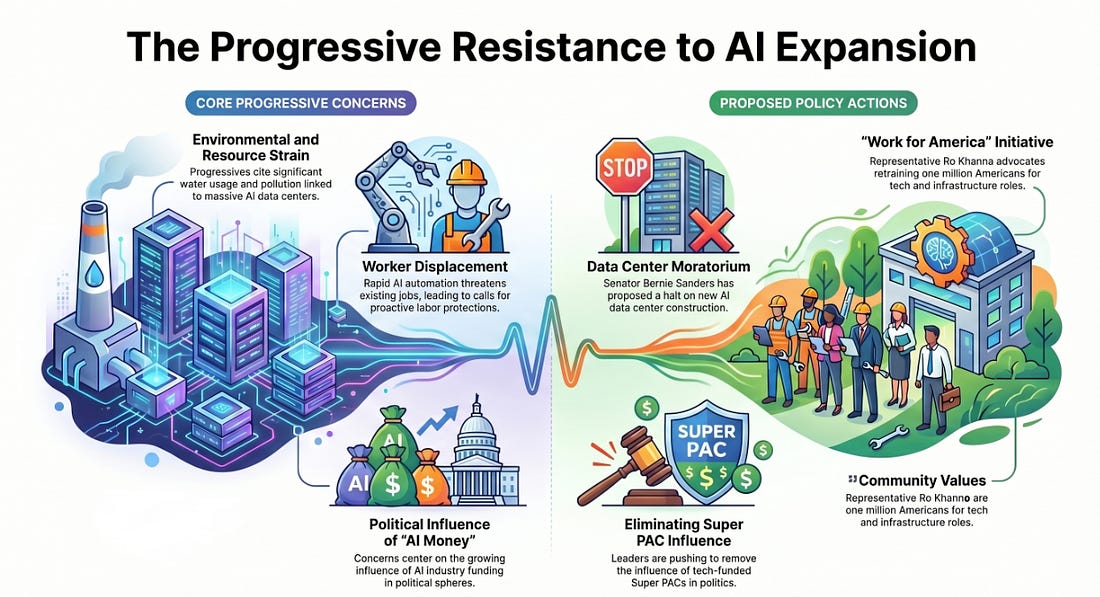
A growing group of progressive Democrats is taking a tougher stance on artificial intelligence, creating a widening divide inside the Democratic Party over the future of AI regulation. Leaders like Bernie Sanders, Alexandria Ocasio-Cortez, and Ro Khanna are pushing back against the rapid expansion of AI infrastructure, particularly large data centers tied to companies like Meta. Their concerns range from environmental damage and water usage to worker displacement and the growing influence of AI money in politics. Sanders has proposed a moratorium on new data centers and renewed calls to eliminate super PAC influence, while AOC has highlighted pollution concerns linked to AI facilities in Georgia. Khanna, meanwhile, is advocating for a “Work for America” initiative that would retrain up to 1 million Americans for tech and infrastructure jobs as AI automation accelerates. The debate signals that AI policy is quickly becoming one of the most politically divisive issues in Washington, with progressives demanding stricter oversight as the AI industry races to expand. How to Master Dynamic Workflows
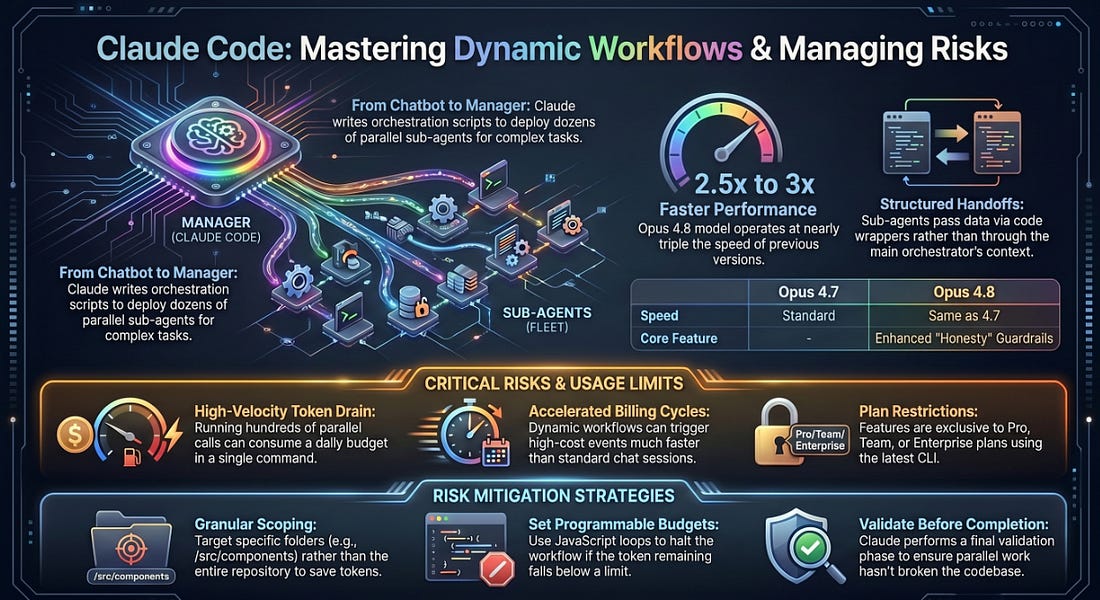
In Claude Code, dynamic workflows allow the agent to move beyond linear chatting by writing and executing its own orchestration scripts. It acts as a “manager,” spawning multiple parallel sub-agents to tackle complex, multi-part tasks simultaneously. Dynamic workflows transform Claude Code from a single agent into an orchestrator. Instead of solving a massive problem step-by-step in one thread, Claude breaks the problem down, creates a fleet of sub-agents to handle the sub-tasks in parallel, verifies their output, and merges the results into a final solution. This is best for large-scale refactors, documentation generation, or complex bug hunting across large codebases. Be aware, your tokens may run out quickly if limited, or send you a large bill. How to Use Dynamic WorkflowsSince this is currently in Research Preview, you access it through specific commands in the Claude Code CLI or the supported IDE extensions. 1. Enable/Invoke via CLIIn the Claude Code terminal, you don’t usually need a special “mode” switch; you simply prompt Claude with a high-level, complex task that implies parallelization.
2. Scoping the Task (Best Practice)Because this feature consumes significantly more tokens (as it is running many instances of Claude at once), start small:
3. Monitor ProgressWhile the workflow is running, the CLI will typically show a progress indicator or a list of active sub-tasks.
4. Requirements
Warning: As mentioned above, in case you dint’t read all the way down here, watch your token usage/billing. Since dynamic workflows run hundreds of parallel calls, a single command can consume a large portion of your rate limit or budget much faster than a standard chat session. 🧰 AI Tools of The Day
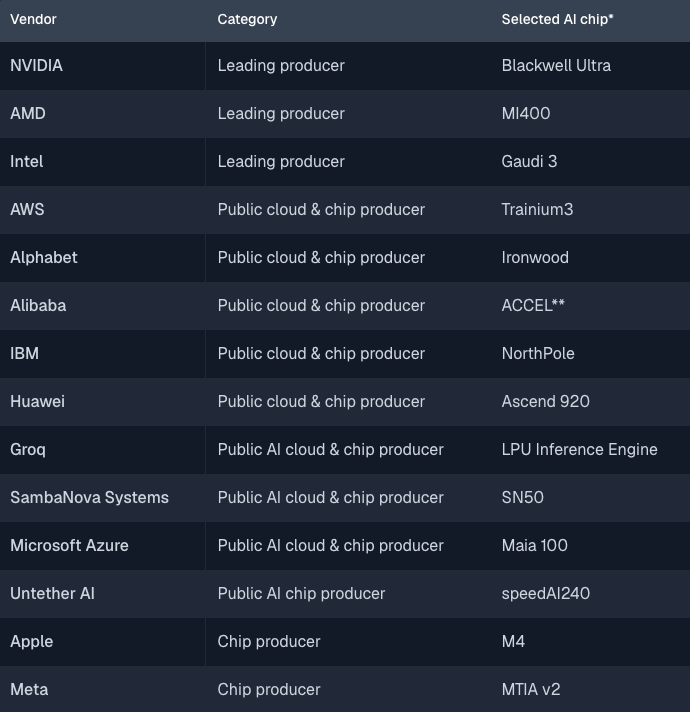
It’s Not Just Nvidia anymore, it’s war…The global AI boom has sparked an infrastructure arms race. While Nvidia still commands 80%–90% of the market (briefly hitting a $4 trillion valuation), the world’s tech giants are tired of waiting in line. Faced with 10-week to 6-month lead times, the industry is shifting toward “Vertical AI Infrastructure,” designing custom silicon to bypass the middleman. The Challenger BenchNearly every major “hyperscaler” now has a custom chip program to lower costs and boost performance:
Why Go Custom?For these companies, the move isn’t just about saving money; it’s about survival. Custom silicon offers:
From Earth to MarsThe race has even reached deep space. NASA recently tested its High Performance Spaceflight Computing (HPSC) chip. This radiation-hardened processor delivers 100x to 500x the performance of current space-grade tech, allowing future Mars rovers and lunar habitats to navigate autonomously without waiting for instructions from Earth. Companies understand that creating the models and code is not enough; they must own the sand it runs on. 📚 Learning CornerClaude’s Dynamic Workflows🚀 Showcase Your Innovation in the Premier Tech and AI Newsletter (link) As a vanguard in the realm of technology and artificial intelligence, we pride ourselves in delivering cutting-edge insights, AI tools, and in-depth coverage of emerging technologies to over 55,000+ tech CEOs, managers, programmers, entrepreneurs, and enthusiasts. Our readers represent the brightest minds from industry giants such as Tesla, OpenAI, Samsung, IBM, NVIDIA, and countless others. Explore sponsorship possibilities and elevate your brand's presence in the world of tech and AI. Learn more about partnering with us. You’re a free subscriber to Yaro’s Newsletter. For the full experience, become a paying subscriber. Disclaimer: We do not give financial advice. Everything we share is the result of our research and our opinions. Please do your own research and make conscious decisions.
|






No comments:
Post a Comment