
⚔️OpenAI vs. Anthropic Is Becoming a $100 Million Political FightPlus: The Rise of World Models Explained
AI companies are taking the fight straight into politics, backed by rapidly escalating war chests. OpenAI and Anthropic are now pouring tens of millions into aligned super PACs, each trying to shape how AI gets regulated. What used to be a game dominated by hyperscalers is now being disrupted by the new AI incumbents, all competing to define the rules of the next technological era. At the same time, world models are all the hype, AI systems designed to understand and simulate reality itself. We break down what they are and why they matter. And on the hardware side, Apple is positioning itself to do what it has done before, enter a nascent category and reshape it entirely, this time targeting smart glasses and the broader $200B eyewear market. Let’s dive in and stay curious. Let’s dive and stay curious.
📰 AI News and Trends
OpenAI vs. Anthropic Is Becoming a $100 Million Political Fight
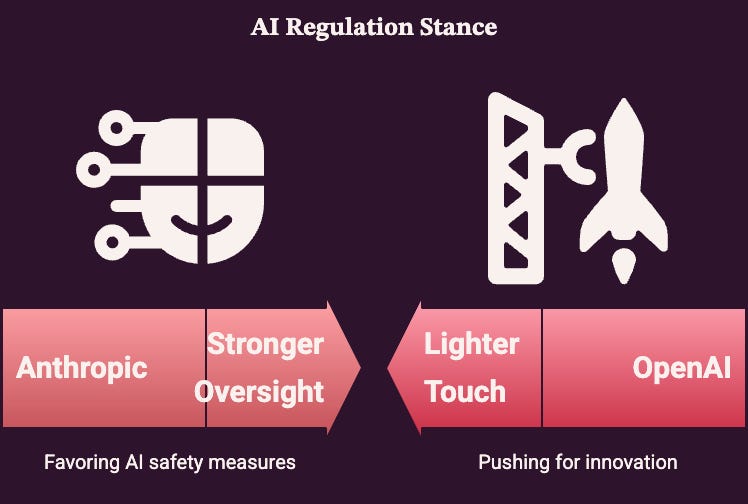
The battle between OpenAI and Anthropic has spilled into U.S. politics. Two rival super PACs aligned with the competing AI giants have already committed nearly $24 million to the 2026 midterm elections, which will take place tomorrow, Tuesday, June 2nd, with more than $100 million expected to follow. At the heart of the conflict is a fight over how AI should be regulated, of course. Anthropic-backed groups generally favor stronger oversight and AI safety measures, while OpenAI-aligned organizations are pushing for a lighter regulatory touch to accelerate innovation. The rivalry has become so intense that candidates are reportedly avoiding discussions about AI altogether to escape becoming targets in the crossfire. As AI increasingly shapes economies, jobs, and national security, Silicon Valley is now investing heavily in shaping the lawmakers and policies that will govern the technology’s future. 🧰 AI Tools of The DayThree Underrated AI Apps you need to try (If you haven’t)
Apple Is Preparing to Disrupt the Smart Glasses Industry
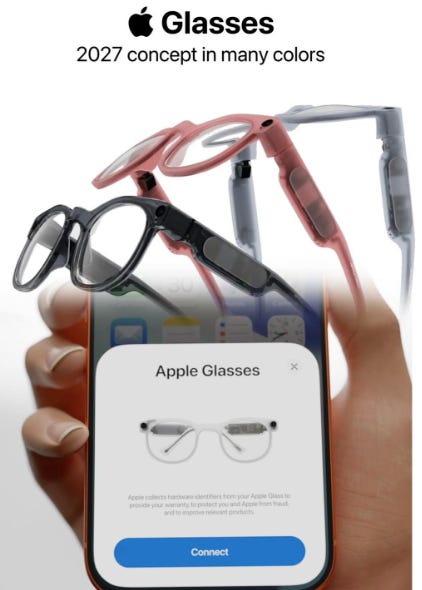
Apple is preparing its next major AI-powered hardware push with smart glasses that could do to the $200 billion eyewear industry what the Apple Watch did to traditional watches. After disrupting watch brands like Fossil and Swatch and building a wearables business that generates an estimated $17 billion annually, Apple is now targeting the billions of people who wear prescription glasses or sunglasses. The company is reportedly developing AI-enabled glasses deeply integrated with the iPhone and a revamped Siri assistant, positioning them as both a consumer electronics device and an everyday fashion accessory. The move puts Apple on a collision course with Meta, whose Ray-Ban smart glasses have gained early traction. Still, Apple is betting that its ecosystem of more than 2 billion active devices, retail presence, and AI capabilities can reshape the market. At the same time, Apple is accelerating its AI roadmap with a dedicated Siri chatbot app that syncs conversations across devices via iCloud. In contrast, next-generation Apple TV and HomePod mini devices are being upgraded to support Apple Intelligence features. Together, these efforts signal that Apple sees AI-powered wearables, not smartphones, as the next major computing platform. 📚 Learning CornerHow World Models Work
The Rise of World Models Explained
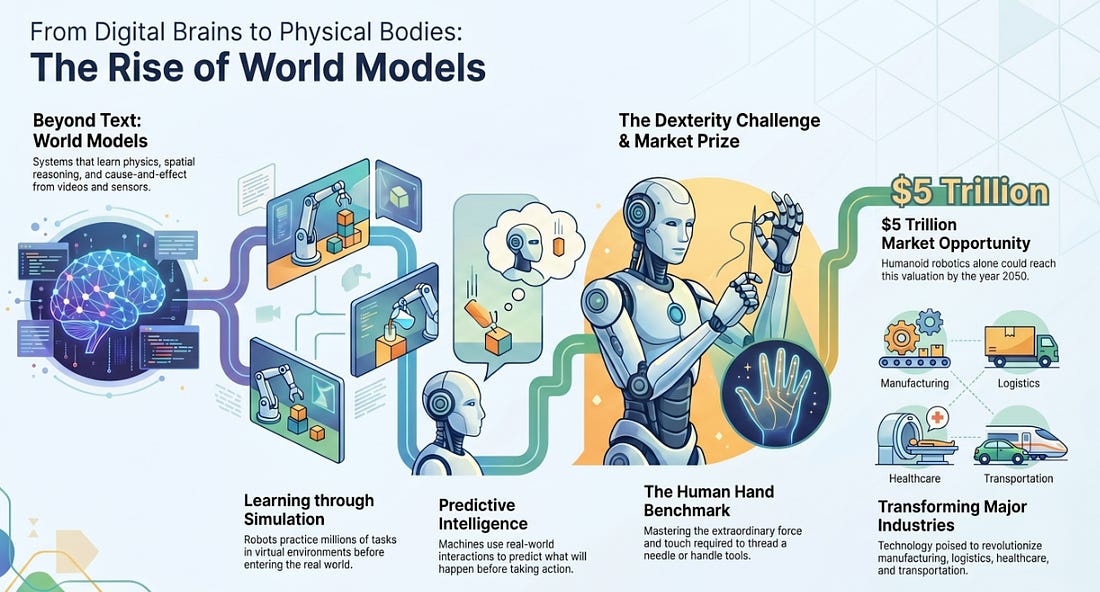
The next major frontier in AI isn’t chatbots, it’s teaching machines to understand and interact with the physical world. This is why companies like NVIDIA, Google DeepMind, World Labs, Figure AI, and Sanctuary AI are investing billions into “world models” AI systems that learn physics, spatial reasoning, cause and effect, and how objects, people, and environments behave. While large language models learn from text, world models learn from videos, sensors, robot movements, simulations, and real-world interactions, allowing robots to predict what will happen before taking action. The ultimate goal is to create machines capable of performing the countless tasks humans do with ease, from folding laundry and stocking shelves to assisting in hospitals and factories. The biggest challenge isn’t intelligence, but dexterity. Many experts now view the human hand as the ultimate test for physical AI because tasks like picking up fragile objects, threading a needle, or handling tools require an extraordinary understanding of force, touch, and movement. To solve this, companies are collecting massive datasets through teleoperation, motion-capture gloves, cameras, and synthetic simulations that let robots practice millions of tasks in virtual environments before entering the real world. The prize is enormous; analysts estimate humanoid robotics alone could become a $5 trillion market by 2050, making world models the foundational technology that could power the next industrial revolution and transform industries ranging from manufacturing and logistics to healthcare and transportation. 🚀 Showcase Your Innovation in the Premier Tech and AI Newsletter (link) As a vanguard in the realm of technology and artificial intelligence, we pride ourselves in delivering cutting-edge insights, AI tools, and in-depth coverage of emerging technologies to over 55,000+ tech CEOs, managers, programmers, entrepreneurs, and enthusiasts. Our readers represent the brightest minds from industry giants such as Tesla, OpenAI, Samsung, IBM, NVIDIA, and countless others. Explore sponsorship possibilities and elevate your brand's presence in the world of tech and AI. Learn more about partnering with us. You’re a free subscriber to Yaro’s Newsletter. For the full experience, become a paying subscriber. Disclaimer: We do not give financial advice. Everything we share is the result of our research and our opinions. Please do your own research and make conscious decisions.
|






No comments:
Post a Comment